August 4, 2026 | In Air Quality, Energy, Resources, Sustainability
Making the Case
Why Every School Community Should Care About This Free EPA Resource

When people talk about indoor air quality in schools, the conversation often stays in the facilities office. But the truth is, healthy air affects everyone who walks through a school’s doors: the board member voting on next year’s budget, the teacher trying to keep a classroom focused through the afternoon, the parent packing a lunch, and the student just trying to get through a test without a headache.
That’s exactly why EPA’s “Making the Case for Environmental Health, Academic Performance and High-Performing Facilities” webinar is worth ten minutes of your attention, whether you’re the one signing off on capital budgets or the one living with the results of that decision every day.

What This Webinar Actually Covers
This session is part of EPA’s Indoor Air Quality (IAQ) Master Class Professional Training Webinar Series, a free, on-demand library developed by the School Health and Indoor Environments Leadership Development (SHIELD) Network. Unlike some of the more technical sessions in the series (HVAC systems, moisture control, materials selection), this one is built specifically to answer a different question: why should a district invest in IAQ in the first place, and how do you prove it’s worth the money?
The webinar features contributors from the Center for Green Schools at the U.S. Green Building Council, Healthy Schools Network, the University of Tulsa, and school districts including Blue Valley (KS), Carrollton-Farmers Branch (TX), North East ISD (TX), and Northwest Clean Air Agency (WA). It walks through the return on investment other districts have achieved, connecting environmental health, academic performance, and facility efficiency into a single, board-ready argument.
Why School Board Members and Senior Leaders Should Watch
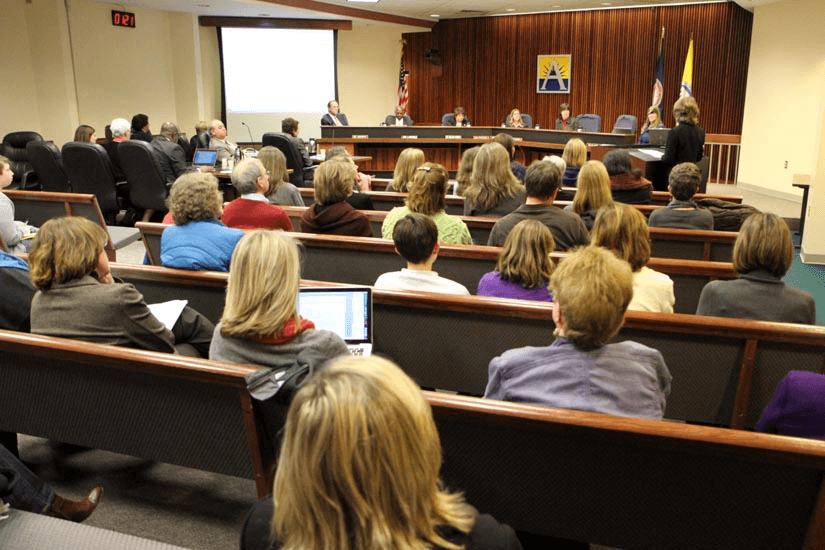
Anyone who has sat through a school board meeting knows that good intentions don’t fund projects. Evidence does. Board members and superintendents need more than “healthier air is good for kids,” even though that’s true. They need numbers, comparisons, and precedent from districts that have already made the case successfully.
The research backs this up. Studies show that children in classrooms with higher outdoor air ventilation rates tend to score higher on standardized math and reading tests than children in poorly ventilated classrooms. Schools without a major maintenance backlog also see measurably better outcomes: an average of 4 to 5 more students per 1,000 in daily attendance, and 10 to 13 fewer dropouts per 1,000, compared to schools that are behind on repairs.
The financial case is just as strong as the academic one. On average, green schools save around $100,000 per year in operating costs, enough to cover a new teacher’s salary, hundreds of new computers, or thousands of textbooks. And the impact isn’t distributed evenly. A 2023 analysis found that facility upgrades produce the biggest test-score gains in higher-need districts, meaning the return on investment is often greatest exactly where funding is hardest to secure.
For a board member trying to justify a line item, or a superintendent trying to win support for a facilities plan, this webinar hands you the framework, and the language other successful districts have already used.
The Cost of Doing Nothing
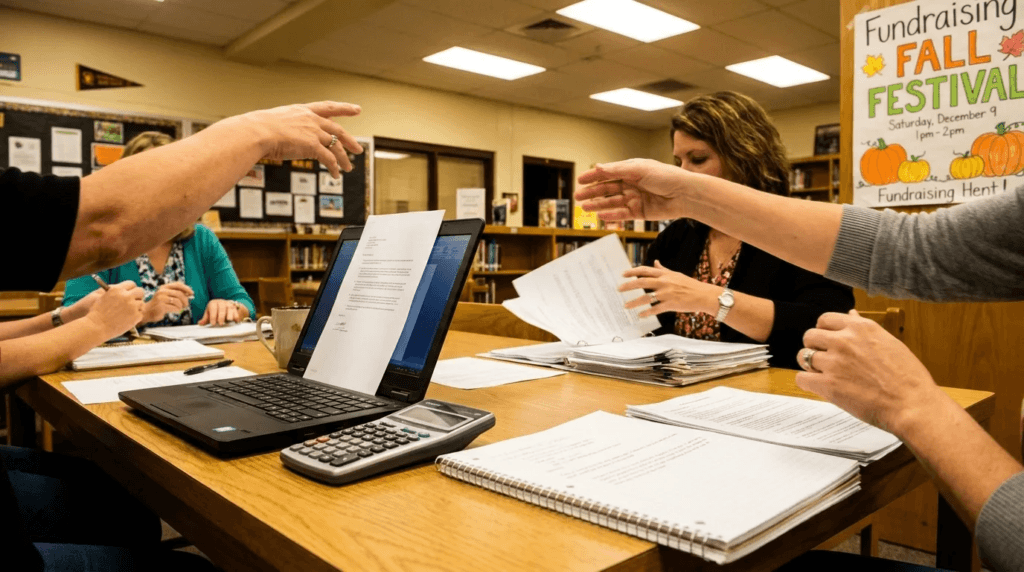
Making the case for investment is easier when you can also show the cost of inaction. A national GAO survey found that 41 percent of school districts need to update or replace HVAC systems in at least half of their schools, representing roughly 36,000 school buildings nationwide. That’s not a distant, hypothetical problem. It’s a funding gap sitting in buildings right now, quietly getting more expensive to fix the longer it waits.
Deferred maintenance rarely stays flat. A ventilation system that needs a filter change today becomes a full system replacement in a few years if it’s ignored. A board that delays a modest IAQ investment isn’t avoiding the cost, it’s postponing it, usually at a steeper price and with more disruption to the school year when it finally can’t wait any longer.
This is the other half of what “Making the Case” teaches: how to frame IAQ investment not as a discretionary expense, but as a cost the district is going to pay one way or another, either proactively and affordably, or reactively and expensively.
What You’ll Walk Away With
The webinar is about an hour long, free, and available on demand, so there’s no scheduling barrier to watching it before your next planning cycle. By the end, viewers typically come away with:
- A clear framework connecting IAQ investment to academic performance, attendance, and cost savings
- Real examples and data from districts that have successfully secured funding for IAQ improvements
- Language and evidence that translate well into board presentations and budget requests
- A better understanding of how environmental health, high-performing facilities, and district finances are connected rather than competing priorities
It’s tempting to file this under “leadership resource” and move on if you’re not the one approving budgets. But the case being made here touches everyone in a school building.
Teachers benefit directly. Research on classroom conditions shows that modest temperature changes and better ventilation affect students’ ability to concentrate on tasks like reading comprehension and math, which means the air quality in a classroom is directly tied to how manageable, or exhausting, a teaching day feels.
Parents benefit from understanding this case too. When a district can point to real evidence, better attendance, better test scores, real cost savings, it becomes easier for parents to advocate for their own school’s needs at board meetings, in PTA conversations, or simply in understanding why a maintenance project matters more than it might seem.
And students, of course, are the ones actually breathing the air, sitting in the temperature, and taking the tests these studies are measuring. Making the case for IAQ investment is, at the end of the day, making the case for them.

From Evidence to Action
Watching a webinar is a start. It is not the finish line. The real value of “Making the Case” isn’t the hour you spend watching it, it’s what you do with the argument once you have it. And the single most powerful thing a district can do with that argument is put it in writing: a real, actionable IAQ Management Plan.
Here’s why that document matters more than almost anything else you could do next. A plan turns “we should probably look into this” into a concrete, board-approvable roadmap with specific actions, owners, and timelines. Districts that write the plan get the budget line item, win the grant, and see the HVAC system replaced before it fails outright. Districts that don’t write it down are still having the same conversation next year, and the year after that.
This is where the Go Green Initiative comes in. Our Improving IAQ and Reducing GHG program exists to help districts take exactly this next step, and we make it as low-friction as possible. You don’t need a finished, polished plan to bring to us, and you don’t even need a blank page to start from.
If your district hasn’t written a plan yet, download our free IAQ Management Plan template and use it as your starting point. GGI reviews IAQ Management Plan submissions at any stage of completion, whether you’re filling out that template for the first time or refining a draft that’s already circulated through your facilities team. Our team provides real, substantive feedback to help you strengthen it into something your board can act on.
If you watch “Making the Case” and walk away convinced, and the evidence makes that easy, don’t let the momentum stop there. Draft the plan. Submit it for feedback. Turn the argument into the document that actually moves your district’s air quality, and your students’ outcomes, forward.
Beyond the webinar itself, GGI’s free IAQ course library can help you build that plan from the ground up. Start with Unit 1, Course 1: Creating an Energy Efficient IAQ Management Plan, the same course we’ve built our recent training campaign around, for a direct, structured walkthrough of what a strong plan actually includes. Between the webinar’s evidence, the course library’s guidance, and our plan review process, there’s a clear, supported path from “here’s the case” to “here’s our district’s plan,” and from there, to a healthier building.

Where to Start
If you’re a board member or superintendent, watch this webinar before your next budget cycle, then don’t stop at watching. Bring the framework into the room, and leave that room with a plan in motion. If you’re a teacher, parent, or staff member, watch it anyway. Understanding the case makes you a sharper advocate wherever you sit in the conversation, and a district’s plan gets stronger when more people understand why it exists.
Register to watch “Making the Case for Environmental Health, Academic Performance and High-Performing Facilities” through EPA’s Master Class Professional Training Webinar Series. You’ll get the link to watch on your own time once you register. Then take the next step and submit your district’s IAQ Management Plan, wherever it stands today, for feedback from GGI’s team.
The evidence already exists. The savings already exist. What most districts are missing isn’t the case, it’s the plan that turns the case into results. Don’t let yours be one of them.