February 23, 2026 | In Air Quality, Resources, Sustainability
The Final Hours: Why You Should Apply for the IAQ Grant Before the Deadline
A last-minute case for why eligible districts should submit their applications

The application deadline for the NSBA/Go Green Initiative Indoor Air Quality Grant is just a handful of days away. If you’re reading this and your district is eligible, this post is for you.
We’re not going to repeat everything we’ve covered over the past few months. Instead, we’re going to make one clear, direct case for why you should stop what you’re doing, visit the application link and submit your application.
The Simple Truth
Your students spend approximately 1,000 hours every school year inside your buildings. The air they breathe during those hours directly determines how often they get sick, how well they can focus, how many days they attend school and how effectively they learn.
This grant is for districts serving predominantly low-income students and designed to serve resources for improving indoor environmental conditions that have historically been scarce. Maintenance budgets are stretched thin. Facilities staff are overextended. Technical expertise is limited. The gap between knowing that air quality matters and being able to do something about it is wide.
This grant closes that gap. With up to $45,000 in funding, free monitoring equipment, and comprehensive expert support from the EPA and Go Green Initiative, selected districts receive everything they need to make meaningful, lasting improvements to their indoor environments.
Why Today Matters
We understand that administrators are busy. We understand that the past months have been full of competing priorities: budget meetings, board sessions, staffing challenges, curriculum concerns and the thousand other demands that come with running a school district.
However, consider this: the time it takes to submit this application is measured in hours, not days or weeks. The impact of being selected is measured in years, in healthier students, cleaner air, reduced emissions, lower long-term costs and a district that has permanently institutionalized its commitment to environmental health.
The return on investment for completing this application today is extraordinary.
For Those Who Have Been Hesitating
Over the past months, we’ve heard many reasons why districts have been hesitant to apply. Let’s address them one final time:
“We might not get selected, so why bother?”
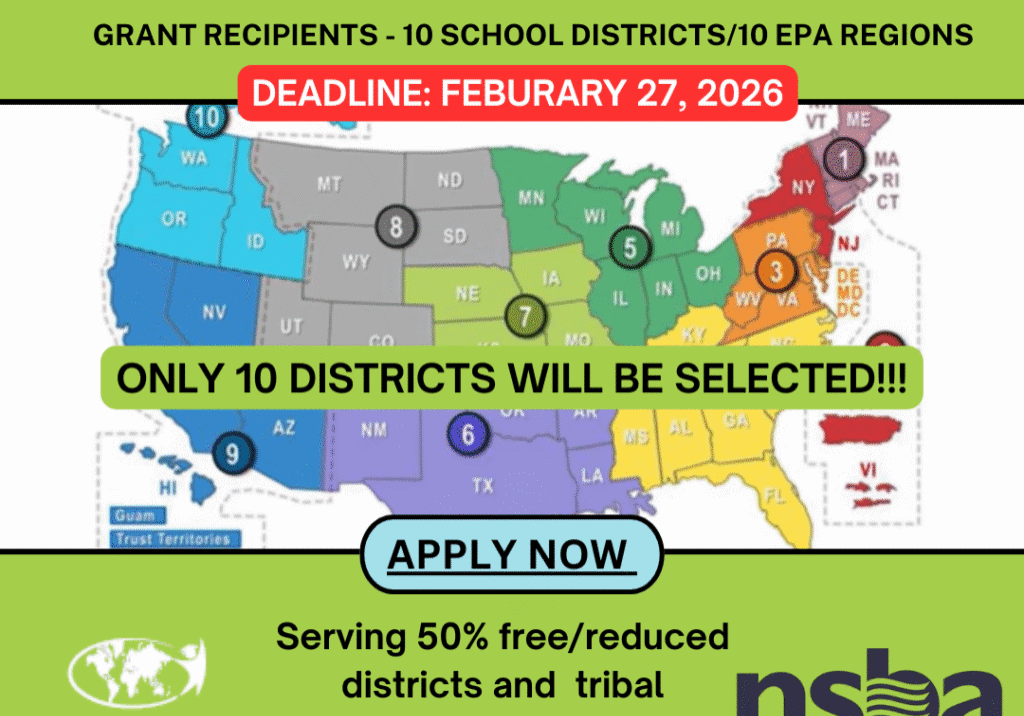
With only 10 spots available nationally, it’s true that most applicants won’t be selected. However,consider the alternative, if you don’t apply, your probability of selection is exactly zero. If you do apply, that probability becomes something greater than zero. Given the minimal time investment required, those odds are absolutely worth pursuing.
Moreover, the process of applying has value in itself. Documenting your district’s needs, articulating your goals and engaging with the eligibility requirements helps you better understand your own situation and can inform future grant applications or budget requests.
“Our district doesn’t have the technical expertise to manage this.”
This concern fundamentally misunderstands what the program provides. Technical expertise is not something you need to bring to this program, it’s something the program brings to you. EPA and Go Green Initiative staff will work directly alongside your team through every step: policy development, assessments, training, planning, implementation and reporting.
You don’t need to know how to conduct an air quality assessment. You need to be willing to work with experts who do.
“We’re too far behind to pull together a strong application.”
The application asks for basic district information and proof of eligibility. It is not a comprehensive proposal requiring weeks of preparation. If you have access to your district’s demographic data and can document your free/reduced-price lunch percentage or Tribal community status, you have what you need to apply.
Contact Andrew Kamali (AndrewKamali@GoGreenInitiative.org) right now if you need assistance pulling together last-minute information. That’s what he’s there for.
“We started some IAQ work already, isn’t this for districts starting from scratch?”
Quite the opposite. Districts that have already begun working on indoor air quality are in an excellent position to benefit from this program. The initiative is specifically designed to help districts institutionalize and sustain existing efforts. Your prior work is an asset, not a disqualifier.
“We serve a Tribal community but our free/reduced lunch percentage is below 50%.”
You are eligible. Tribal communities qualify regardless of free/reduced-price lunch percentage.
A Final Look at What’s at Stake
Let’s be concrete about what this program means for your students and community:
For Student Health: Improved indoor air quality means fewer asthma attacks, fewer respiratory infections, fewer allergy episodes and fewer sick days. For low-income students who may already face health challenges and have limited access to healthcare, this is significant. Clean air at school is one of the most direct ways a district can support student health.
For Academic Outcomes: Research consistently shows that better air quality improves cognitive function, concentration and academic performance. Students in schools with effective ventilation and lower pollutant levels perform measurably better on standardized tests and demonstrate stronger engagement in learning activities.
For Staff Wellbeing Teachers and staff spend their entire workday in your buildings. Improved air quality means healthier educators, lower absenteeism among staff and a more stable, effective workforce.
Long-Term Costs: Districts that implement effective IAQ management plans often see reductions in long-term maintenance costs, HVAC repair expenses and energy consumption. The upfront investment, which in this case is being covered by the grant, frequently pays for itself over time.
For Environmental Impact: The program’s greenhouse gas reduction component helps your district lower its carbon footprint, contributing to broader environmental goals while often improving energy efficiency and reducing utility costs.
For Your Community: A district that takes visible, documented action to improve school environments sends a powerful message to families, staff and the broader community about its commitment to student wellbeing.
The Complete Package One Final Time
For eligible districts selected to participate, the program provides:
- Free indoor air quality monitoring equipment
- Comprehensive on-the-ground technical assistance
- Support developing and enacting school board policies
- Baseline IAQ and GHG assessments
- Training for interested parties
- Help developing district-wide management plans
- Implementation support
- Measurement and reporting tools
- Ongoing partnership with EPA and Go Green Initiative experts
All of this at no matching cost to your district.
What Happens After You Apply
For those selected:
- Spring 2026: Notification of selection
- Summer 2026: Onboarding, team introductions, and initial planning
- August 1, 2026: Program implementation begins
- 2026-2027 School Year: Complete six program steps with continuous expert support
For those not selected, future application cycles will offer additional opportunities. The experience of applying provides valuable documentation of your district’s needs and goals.
Do This Right Now
Stop reading.
Click on the “Apply” button below.
Begin your application.
If you have questions, contact Andrew Kamali to answer last-minute questions, clarify eligibility concerns and help you submit a complete application:
📧 andrewkamali@gogreeninitiative.org
The deadline is THIS FRIDAY, February 27, 2026. There is no extension, no grace period and no second chance at this application cycle.
Your students breathe the air in your schools every single day. Today is the day to do something about it.
Apply now: https://nsba.org/resources/resources-for-school-board-members/iaq-assessment
FINAL Deadline: February 27, 2026