March 13, 2026 | In Air Quality, Health, Resources, Sustainability
A Breath of Fresh Air for Rural Schools
The Go Green Initiative and National Rural Education Association join forces to deliver practical indoor air quality solutions and sustainable energy strategies to rural districts nationwide

Rural schools are the anchors of their communities. They host Friday night games, community meetings, emergency shelters, and lifelong memories. They educate nearly one in five public school students in the United States. Yet despite their outsized impact, rural districts often face disproportionate challenges—aging facilities, limited capital budgets, small maintenance teams, and fewer opportunities to access specialized expertise in environmental health and energy management.
That’s why the new partnership between the Go Green Initiative (GGI) and the National Rural Education Association (NREA) is such an important milestone. Together, these two mission-driven organizations are working to ensure that rural students, educators, and communities have access to healthier, safer, and more energy-efficient learning environments.
This collaboration brings practical tools, professional training, and policy support directly to rural school leaders—meeting them where they are and equipping them for long-term success.
A Century of Advocacy Meets Two Decades of Environmental Leadership
Founded in 1907, the National Rural Education Association has spent more than a century advocating for rural schools. NREA was established to ensure that rural districts—often overlooked in national policy discussions—have a strong, unified voice. Over the years, the organization has supported rural educators through federal advocacy, research, professional development, and leadership networking.

Today, NREA continues to champion the needs of rural communities, recognizing that geography should never limit opportunity.
The Go Green Initiative, founded in 2002, shares that commitment to equity—particularly environmental equity. For more than 20 years, GGI has partnered with school districts to improve environmental conditions in and around schools, especially in communities facing high poverty and pollution burdens.
GGI operates at the intersection of public health, education, and sustainability. The organization works directly with school districts to:
- Adopt formal Indoor Air Quality (IAQ) and Greenhouse Gas (GHG) reduction board policies
- Conduct baseline IAQ assessments
- Benchmark building performance using ENERGY STAR® Portfolio Manager®
- Provide professional development and technical assistance
- Align energy efficiency with health protections
In recent years, GGI has sharpened its focus on Indoor Air Quality—recognizing that clean air is foundational to student health, attendance, academic performance, and staff well-being.
Now, through this partnership with NREA, those resources are reaching rural districts across the country.
Why Indoor Air Quality Matters in Rural Schools
Indoor air quality is often invisible—but its impact is not.
Poor IAQ is linked to increased asthma attacks, higher absenteeism, reduced concentration, and greater teacher sick leave. For rural communities—where healthcare access may be limited and school buildings often serve multiple community functions—preventative environmental health strategies are especially important.
Many rural districts operate in older buildings with deferred maintenance needs. HVAC systems may be aging. Ventilation systems may not have been updated in years. Facilities staff are often small teams responsible for multiple buildings spread across large geographic areas.
Without clear frameworks and accessible training, it can be difficult for rural leaders to know where to begin.
That’s where this partnership creates real momentum.
Practical Solutions, Not Overwhelming Complexity
One of GGI’s strengths is its structured, step-by-step approach. Rather than offering abstract recommendations, GGI provides a roadmap that districts can follow:
- Adopt a board-level IAQ and GHG reduction policy
- Conduct a baseline assessment of current building conditions
- Benchmark energy performance
- Implement targeted improvements
- Track progress and adjust strategies
This governance-first model ensures that environmental improvements are embedded into district systems—not treated as one-time projects.
Through NREA’s national network of rural superintendents, school board members, and education leaders, this model can now be scaled in ways that respect rural contexts. The goal is not to overwhelm districts with new requirements. The goal is to empower them with clarity.
Aligning Health and Energy Savings
A common misconception in facilities management is that improving ventilation and protecting indoor air quality will drive up energy costs. GGI’s work demonstrates the opposite: when done strategically, energy efficiency and health protections can reinforce each other.
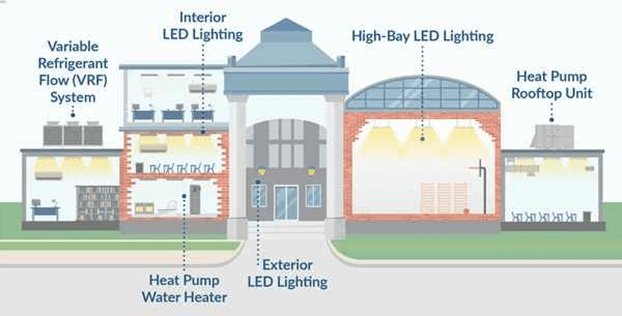
By using tools like ENERGY STAR Portfolio Manager, districts can identify inefficiencies, prioritize upgrades, and make data-informed decisions. Improvements such as optimized ventilation schedules, high-efficiency filtration, and building automation enhancements can:
- Improve indoor air quality
- Reduce greenhouse gas emissions
- Lower operating costs
- Extend equipment life
This “Energy Savings Plus Health” approach is particularly valuable for rural districts operating within tight budgets. Savings generated through efficiency can be reinvested into instruction, student services, and community programs.
Supporting Rural Leadership
Rural superintendents and principals often wear multiple hats. Business officials may also oversee facilities. School board members are deeply connected to their communities and must balance fiscal responsibility with student well-being.
This partnership recognizes that rural leadership requires practical tools, not abstract theory.
Through webinars, professional training, policy templates, and technical assistance pathways, rural districts affiliated with NREA can access:
- IAQ fundamentals training for administrators and facilities teams
- Guidance on drafting and adopting board policies
- Support for benchmarking and energy management
- Access to proven implementation frameworks
GGI’s existing cohort-based initiatives have demonstrated that structured support—combined with clear deliverables—drives measurable outcomes. Rural districts now have greater access to these same systems.
Strengthening Communities Through Schools
In rural America, schools are often the largest employer in town. They are economic engines and social centers. When a school improves its facilities, the entire community benefits.
- Cleaner indoor air means healthier students and staff.
- Efficient buildings mean lower operating costs.
- Sustainability initiatives create opportunities for student engagement and workforce development.
GGI’s broader programming—including sustainability planning, waste reduction initiatives, and student leadership programs—can further enhance community resilience. When students participate in environmental stewardship efforts, they build leadership skills that strengthen their towns for generations.
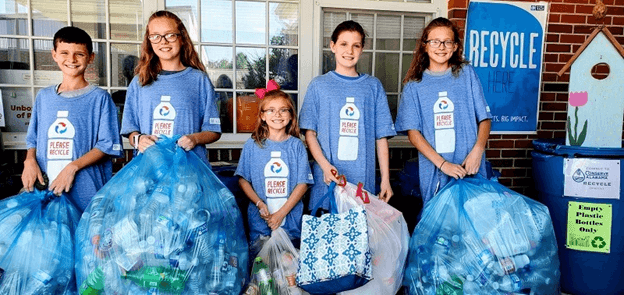
NREA’s deep understanding of rural culture ensures that these initiatives are introduced with respect for local values and priorities.
An Equity Commitment in Action
At its core, this partnership reflects a simple principle: rural students deserve the same healthy learning environments as any other child in America.
- Geography should not determine air quality.
- ZIP codes should not dictate access to expertise.
- Budget size should not limit environmental protections.
By combining NREA’s century-long advocacy legacy with GGI’s two decades of environmental leadership, this collaboration expands access to evidence-based, sustainable solutions.
It ensures that rural districts are not navigating complex IAQ and energy decisions alone. Instead, they are supported by a national network committed to their success.
Looking Ahead
Awareness of indoor air quality and environmental health has grown significantly in recent years. Communities are more engaged in conversations about ventilation, filtration, and sustainability. Funding streams are evolving. Expectations are rising.
But awareness without structure can stall progress.
This partnership provides structure.
It offers rural districts a clear path forward—grounded in policy, guided by data, and reinforced by professional training.
For rural students, teachers, and families, this truly is a breath of fresh air.
As the Go Green Initiative and the National Rural Education Association move forward together, the message is clear: healthy, energy-efficient schools are not a luxury. They are a foundational investment in lifelong outcomes, community resilience, and the future of rural America.