May 3, 2026 | In Air Quality
Green Cleaning in Schools: A Smart Investment in Health, Performance, and Cost Savings
Discover how the EPA’s tools and on-demand webinar can help your district create safer, healthier learning environments
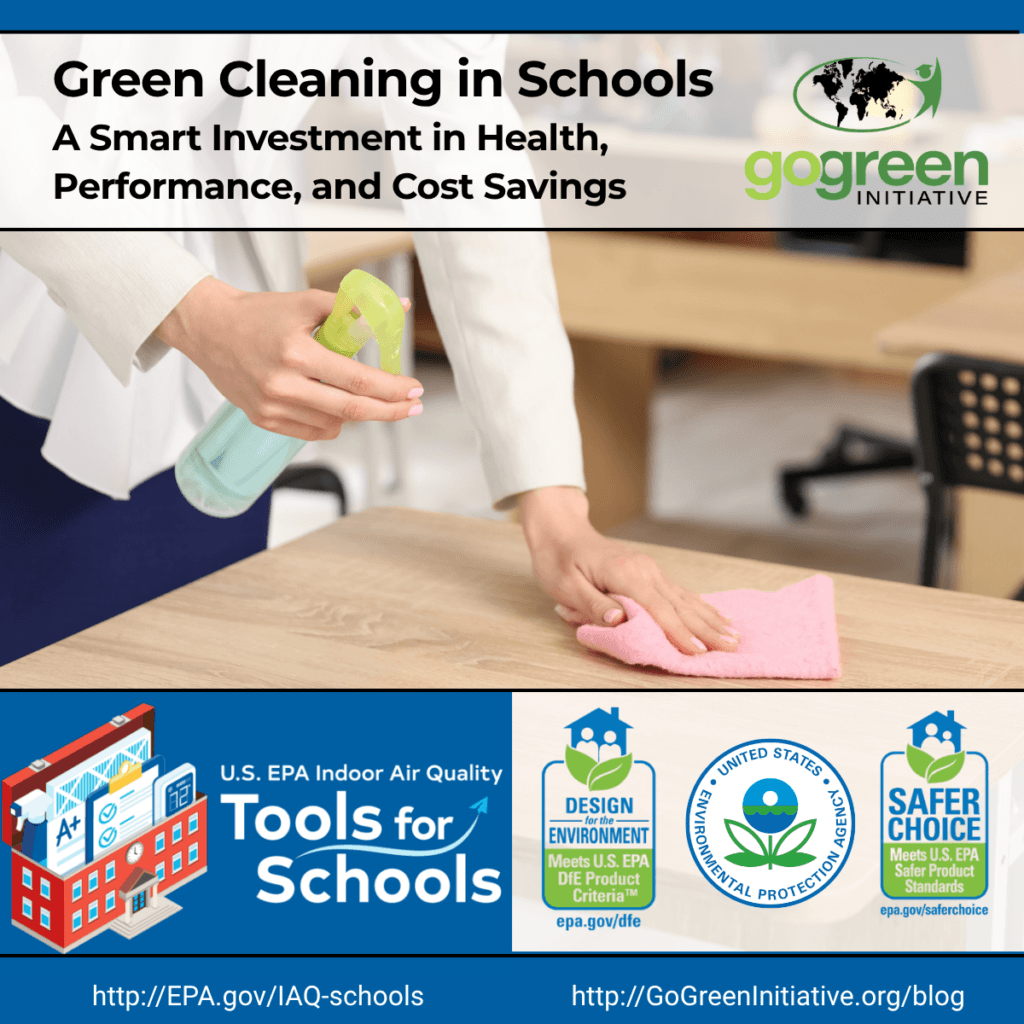
(click the graphic to view webinar)
When school leaders think about improving indoor air quality (IAQ), the focus often turns to HVAC upgrades, filtration systems, or major capital investments. But one of the most immediate and cost-effective ways to improve the air students and staff breathe every day is much simpler:
What you clean with — and how you clean — matters.
Green cleaning is more than a sustainability initiative. It’s a practical, evidence-based strategy for improving student health, reducing absenteeism, supporting staff wellness, and lowering long-term operational costs. And thanks to the U.S. Environmental Protection Agency (EPA), school districts have access to free tools and guidance to get started right away!
One of the most valuable resources is the EPA’s on-demand webinar:
👉https://www.epa.gov/iaq-schools/webinar-green-cleaning-improved-health-return-investment-green-cleaning-schools
This session — part of the EPA’s Indoor Air Quality Tools for Schools program — explains how green cleaning works, why it matters, and how schools are successfully implementing it.
Why Green Cleaning Matters More Than You Think
Every day, students and staff are exposed to cleaning products used throughout school buildings: on desks, floors, restrooms, cafeterias, and high-touch surfaces. Many conventional cleaning products contain chemicals that can negatively impact indoor air quality.
According to the EPA:
- Common cleaning products can release volatile organic compounds (VOCs) that contribute to indoor air pollution
- Exposure to these chemicals can cause respiratory irritation, headaches, and asthma flare-ups
- Children are especially vulnerable due to their developing lungs and higher breathing rates
Green cleaning focuses on reducing these exposures by using safer products and smarter cleaning practices, helping create healthier indoor environments for learning.
The Impact on Student Health and Attendance
Healthy indoor environments directly support student success. When air quality improves, schools often see improvements in attendance, comfort, and concentration.
EPA-supported research shows that better indoor air quality can:
- Reduce asthma triggers and respiratory symptoms
- Lower absenteeism among students and staff
- Improve focus and overall classroom performance
Green cleaning plays a critical role by addressing one of the most consistent sources of indoor air pollutants: cleaning chemicals.
The Data Behind Healthier Schools
The connection between indoor environments and student outcomes is well documented:
- Improved indoor air quality has been associated with up to an 11% increase in student performance
- Asthma is a leading cause of school absenteeism, responsible for millions of missed school days each year in the U.S.
- Healthier school environments contribute to better attendance and learning conditions
Green cleaning supports these outcomes by reducing harmful exposures at the source, before they impact student health.

A Strong Return on Investment (ROI)
Green cleaning isn’t just about health — it’s also a smart financial decision. The EPA’s webinar highlights how districts are seeing measurable returns through:
👉 Reduced Health-Related Costs
Fewer illnesses and asthma-related issues mean less disruption and lower associated costs.
👉 Improved Staff Productivity
Safer products reduce health risks for custodial teams, improving performance and retention.
👉 Extended Asset Lifespan
Less corrosive products help preserve floors, surfaces, and equipment.
👉 Lower Chemical Use
Efficient systems and concentrated products reduce overall consumption and waste.
👉 Watch the webinar:
https://www.epa.gov/iaq-schools/webinar-green-cleaning-improved-health-return-investment-green-cleaning-schools
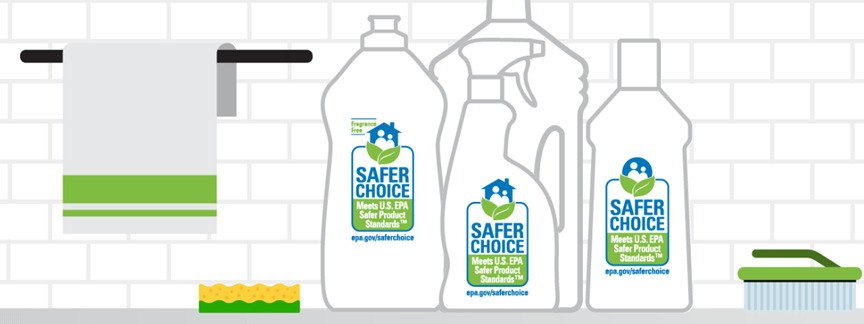
(click the graphic or the link below to learn more about the program)
Choosing Safer Products: EPA-Certified Programs
A key part of green cleaning is selecting products that are proven to be safer for both people and the environment. The EPA offers two trusted certification programs to help schools make informed choices:
✔ EPA Safer Choice
The EPA’s Safer Choice program identifies cleaning products that meet strict health and environmental standards—without sacrificing performance. These products are evaluated for safer chemical ingredients and effectiveness.
👉https://www.epa.gov/saferchoice
(click the graphic or the link below to learn about the program)
✔ Design for the Environment (DfE) Certification
The EPA’s Design for the Environment (DfE) program focuses on antimicrobial products, including disinfectants commonly used in schools. Products with the DfE label are reviewed to ensure they are safer for human health and the environment while still meeting rigorous performance standards.
👉https://www.epa.gov/pesticide-labels/learn-about-design-environment-dfe-certification
Together, these programs make it easier for schools to confidently select cleaning and disinfecting products that support healthier indoor environments.
What Green Cleaning Looks Like in Practice
Transitioning to green cleaning doesn’t mean sacrificing effectiveness. In many cases, it improves cleaning results while reducing risk.
Key strategies include:
✔ Using certified products through EPA programs like Safer Choice and DfE
✔ Prioritizing high-use areas like classrooms and restrooms
✔ Training custodial staff on proper product use and dilution
✔ Improving ventilation during cleaning activities
✔ Using microfiber tools to reduce chemical reliance
These practices are practical, scalable, and supported by EPA guidance—making them accessible for districts of all sizes.

Aligning Green Cleaning with Broader School Goals
Green cleaning supports multiple district priorities:
✔ Student Health and Wellness – Reduces exposure to harmful chemicals
✔ Academic Performance – Supports attendance and concentration
✔ Operational Efficiency – Lowers costs and extends asset life
✔ Sustainability Goals – Reduces environmental impact
✔ Community Trust – Demonstrates a commitment to safe learning environments
For districts already working on IAQ or sustainability initiatives, green cleaning is a natural next step.
A Tool-Rich Resource to Help You Take Action
If you’re ready to move forward, the EPA’s Action Kit is one of the most valuable resources available:
👉https://www.epa.gov/iaq-schools/indoor-air-quality-tools-schools-action-kit
Designed for K–12 schools, it’s packed with practical tools to improve indoor air quality, including:
- Checklists to assess current conditions
- Templates for building an IAQ management plan
- Training resources for staff
- Guidance on cleaning, maintenance, and operations
Green cleaning is a key part of this framework—helping connect everyday practices to long-term IAQ improvements.
And for districts looking for implementation support, the Go Green Initiative (GGI) offers free IAQ resources built from the EPA’s guidance:
👉https://gogreeninitiative.org/iaq
These resources translate EPA best practices into actionable tools designed specifically for school districts.

Why This Matters Right Now
School districts are under increasing pressure to create healthier learning environments—while managing limited budgets and aging infrastructure.
The good news?
You don’t need a major capital project to make meaningful improvements.
Green cleaning offers a high-impact, low-cost opportunity to improve indoor air quality immediately.
Take the First Step Today
🎥 Watch the EPA webinar:
https://www.epa.gov/iaq-schools/webinar-green-cleaning-improved-health-return-investment-green-cleaning-schools
📘 Explore the EPA Action Kit:
https://www.epa.gov/iaq-schools/indoor-air-quality-tools-schools-action-kit
🌱 Access GGI resources:
https://gogreeninitiative.org/iaq
Final Thought
Improving indoor air quality doesn’t always require complex solutions.
Sometimes, it starts with something as simple and powerful as changing the way you clean.
Green cleaning is a smart investment in the health, performance, and future of your students and staff.
And with trusted guidance from the EPA — and support from partners like GGI — there’s never been a better time to get started.



Recent Posts