March 22, 2026 | In Air Quality, Energy, Health
Improving Indoor Air Quality in Schools
What the 2026 Magna Award Winners Show About Healthy Learning Environments
Five school districts across five EPA regions are being recognized for improving indoor air quality, reducing greenhouse gas emissions, and creating healthier learning environments for students and staff.
Healthy Schools Start with Healthy Air
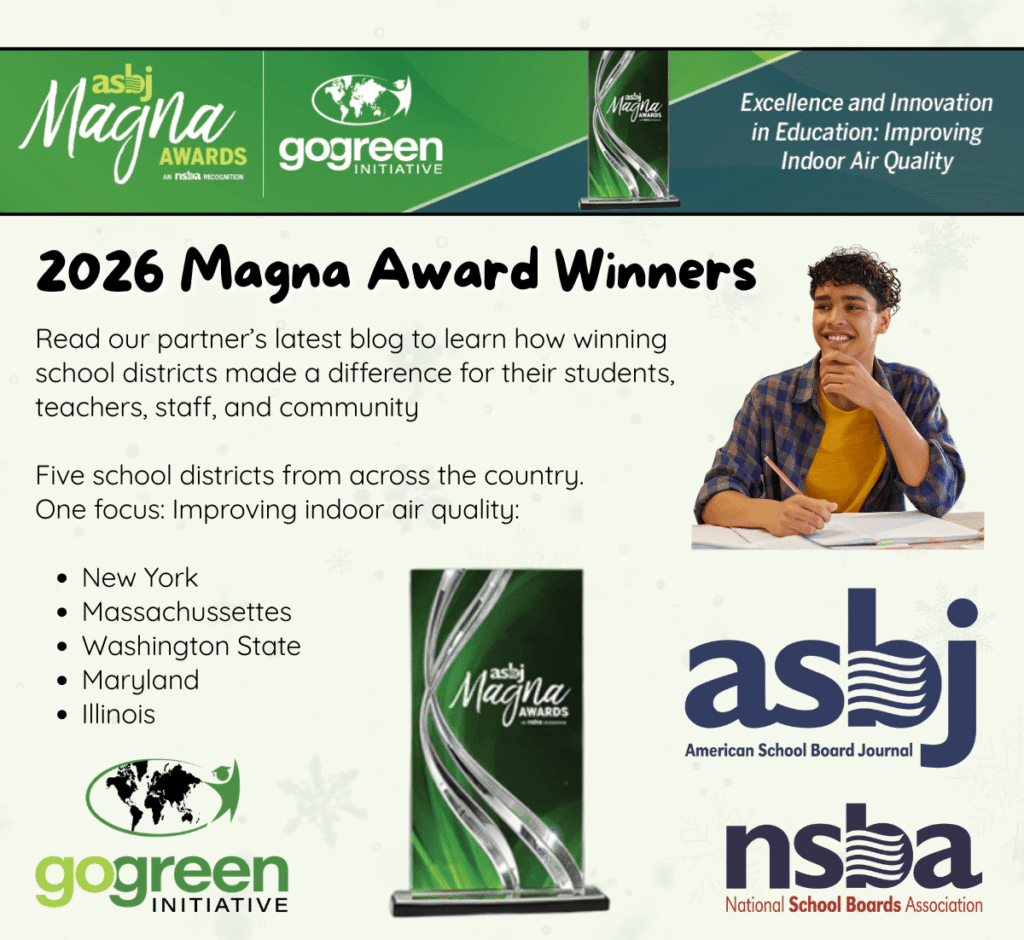
School districts across the United States are taking meaningful steps to improve indoor air quality (IAQ) and create healthier learning environments for students. The 2026 Magna Awards, presented by the National School Boards Association in partnership with the Go Green Initiative, recognizes five school districts that are leading the way in improving air quality, strengthening sustainability practices, and reducing greenhouse gas emissions in K-12 schools.
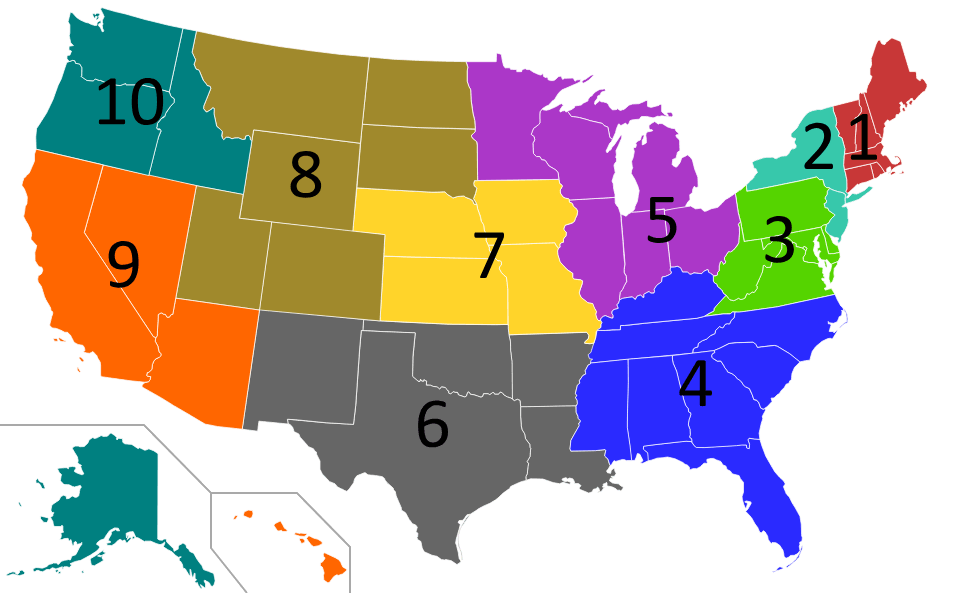
The winning districts represent five EPA regions across the United States, demonstrating that improving school environments is a national priority. Their efforts highlight how thoughtful facility management, energy efficiency, and environmental stewardship can work together to protect student health while supporting stronger learning outcomes.

Why Indoor Air Quality Matters in Schools
Every day, nearly 56 million students and school staff spend their time inside America’s K-12 schools. The quality of the air inside those buildings plays a critical role in student health, attendance, and academic performance.
Research from the U.S. Environmental Protection Agency shows that indoor air pollutant levels can be two to five times higher indoors than outdoors, and sometimes even higher in poorly ventilated buildings. When ventilation systems are outdated or poorly maintained, pollutants such as dust, mold spores, volatile organic compounds, and other contaminants can accumulate inside classrooms.
For students—whose lungs and immune systems are still developing—these environmental conditions can have significant consequences. Poor indoor air quality has been linked to headaches, fatigue, respiratory irritation, asthma attacks, and other health issues that can lead to missed school days.
Improving indoor air quality helps address these risks. Better ventilation, stronger filtration systems, and proactive building management strategies can reduce environmental health hazards while also improving classroom comfort and focus.
Research also suggests that improved ventilation and healthier indoor environments can support better student concentration, improved test performance, and stronger attendance rates.
Simply put: healthy air helps students learn.
The Link Between Energy Efficiency and Healthy Schools
Many of the strategies used to improve indoor air quality also support another important goal—reducing greenhouse gas emissions.
Heating, ventilation, and air conditioning (HVAC) systems represent one of the largest sources of energy use in school buildings. When districts modernize these systems, they can often achieve two outcomes at once:
- Improve ventilation and indoor air quality
- Reduce energy consumption and greenhouse gas emissions
According to the U.S. Environmental Protection Agency, K-12 schools spend billions of dollars annually on energy, making energy efficiency improvements an important opportunity to both reduce costs and improve building performance.
This connection between healthy buildings and sustainable operations is a key focus of the partnership between the National School Boards Association and the Go Green Initiative.
Through this collaboration, school districts gain access to tools, training, and resources that help them develop effective indoor air quality management plans while also identifying opportunities for energy savings and emissions reductions.
By aligning these goals, districts can create learning environments that are healthier for students while also being more environmentally responsible.

Recognizing Leadership Through the Magna Awards
The Magna Awards program celebrates school districts that develop innovative solutions to real-world challenges facing students and educators.
For the 2026 awards, the focus on indoor air quality and greenhouse gas reduction reflects a growing awareness that the physical environment of a school building is deeply connected to student success.
Across the country, school boards and district leaders are recognizing that improving school facilities is not just a maintenance issue—it is an investment in student health, academic performance, and long-term sustainability.
The five districts recognized this year demonstrate what is possible when school systems prioritize healthy school buildings.
The 2026 Magna Award Winners
The following school districts were recognized for their leadership in improving indoor air quality and sustainability in K-12 schools.
GRAND PRIZE WINNERS
under 5,000 enrollment: East St. Louis School District 189 — Illinois (EPA Region 5)
East St. Louis School District 189 received a Grand Prize Magna Award for implementing strategies that strengthen indoor air quality management and improve building performance across district facilities. The district’s efforts focus on improving ventilation and creating healthier learning environments for students and staff.
5,000 – 20,000 enrollment: Issaquah School District 411 — Washington (EPA Region 10)
Issaquah School District was recognized for its comprehensive approach to sustainability and environmental health. By integrating energy management strategies with indoor air quality improvements, the district is demonstrating how healthy building practices can support both student well-being and environmental stewardship.
over 20,000 enrollment: Prince George’s County Public Schools — Maryland (EPA Region 3)
Prince George’s County Public Schools, one of the largest districts in the United States, received a Grand Prize Magna Award for implementing large-scale initiatives to improve building efficiency, enhance ventilation, and reduce greenhouse gas emissions across district facilities.
SILVER AWARD WINNERS
under 5,000 enrollment: Salamanca City Central School District — New York (EPA Region 2)
Salamanca City Central School District earned a Silver Magna Award for strengthening its indoor air quality management practices and implementing sustainability initiatives that help protect student health and improve environmental conditions in school buildings.
over 20,000 enrollment: Boston Public Schools — Massachusetts (EPA Region 1)
Boston Public Schools received a Silver Magna Award for its leadership in using indoor air quality monitoring and data-driven facility management strategies to improve environmental conditions in classrooms throughout the district.
A National Movement Toward Healthier Schools
The districts recognized through the 2026 Magna Awards demonstrate that improving indoor air quality in schools is both achievable and impactful. Their work highlights how leadership from school boards, administrators, and facilities teams can transform school environments into healthier places to learn.
Across the country, more districts are recognizing that healthy school buildings support healthier students—and healthier students are better able to succeed in the classroom.
Through its partnership with the National School Boards Association, the Go Green Initiative is helping school districts build the knowledge, tools, and partnerships needed to make these improvements possible. And by celebrating the success of the 2026 Magna Award winners, this partnership aims to inspire more districts to prioritize indoor air quality, sustainability, and student health.
Because every student deserves to learn in a school where the air is clean, the environment is healthy, and the future is sustainable.