September 17, 2026 | In Air Quality, Energy, Health, Resources, Sustainability
The Interns Who Caught What a $26 Million Bill Couldn’t
How Two Districts Built Energy Programs That Work


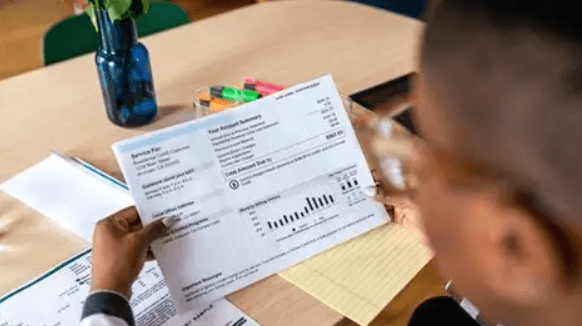
Every week, a team of paid high school interns in Gresham-Barlow School District reviews interval energy data from all 17 of the district’s buildings and tells head custodians exactly where energy is being wasted, building by building, sometimes hour by hour.
In one recent week, interns Kierra and Sam traced a roughly $4,000 cost swing back to an extended equipment run time, then confirmed with facilities staff that the run time had been authorized for a scheduled event. Without that level of digging, the swing could easily have been written off as a hotter or colder month and left unquestioned.

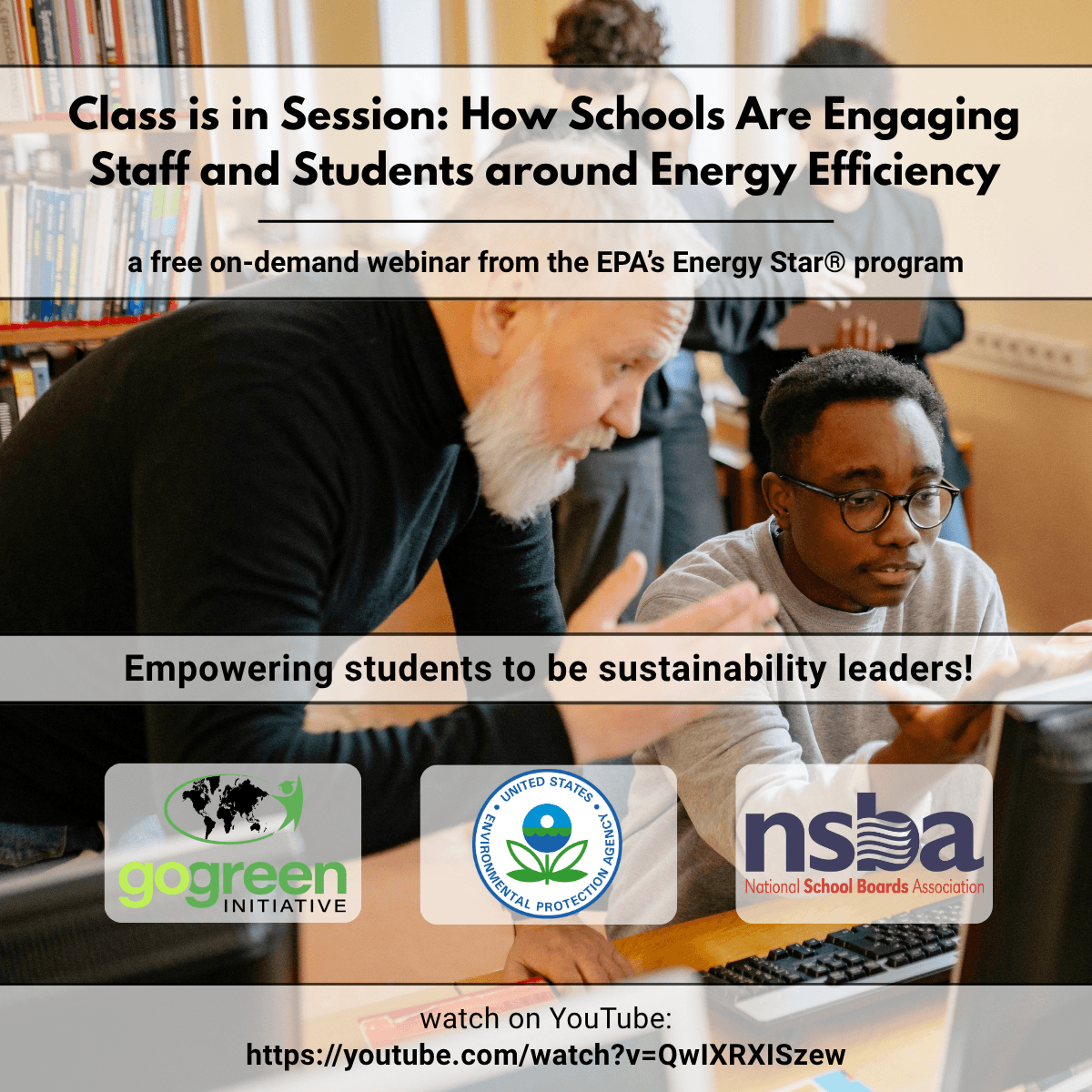
This is the AEM Energy Champions program, one of two strategies covered in a recent ENERGY STAR on-demand webinar, Class Is in Session: How Schools Are Engaging Staff and Students Around Energy Efficiency. The other, from Pinellas County Schools in Florida, has helped that district avoid nearly $70 million in electricity costs since 2015. Together, they make the case that the fastest way to build a lasting energy program isn’t just better equipment. It’s giving the people closest to a building, students included, a real reason to pay attention to it.
The Cost of Doing Nothing
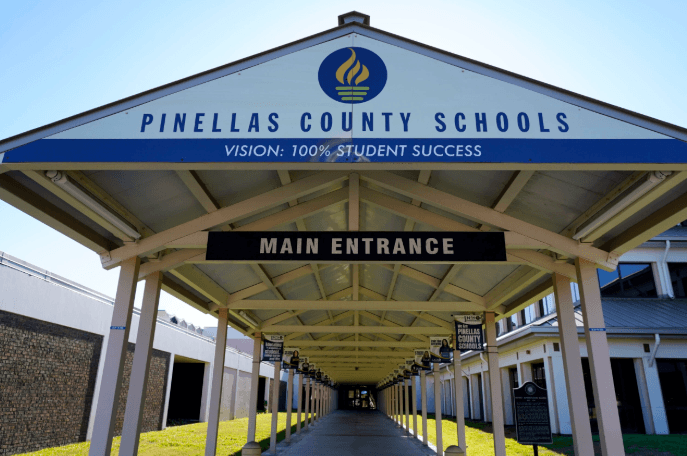
Before Pinellas built a formal energy program, the district had no way to catch waste like this. Buildings ran air conditioning through two-week winter breaks as if students were still in the classroom, largely out of fear that shutting systems down in Florida’s heat and humidity would invite mold or equipment failure.
Pinellas County Schools
Before and after:
- Starting point: a $26 million annual electric bill and no formal energy management program
- Electric rates alone have risen 43 percent since 2015
- Left unaddressed, that rate increase would have pushed the district toward $37 to $40 million a year in electricity costs
- Instead, the district’s bill has settled around $27.7 million, a gap of roughly $10 million a year kept out of utility payments
Gresham-Barlow’s Numbers
They tell a similar story from a smaller district:
- 10 of 17 buildings are now ENERGY STAR certified
- District-wide average ENERGY STAR score of 84
- Named an ENERGY STAR Partner of the Year 12 times

Neither result happened by accident. Both districts treated energy data as something to act on daily, not review once a year, which is exactly what the interns’ weekly reports are built to do.
Meet the Energy Champions
Gresham-Barlow’s student internship model grew out of the district’s long-running Advanced Energy Management (AEM) partnership, which the district’s facilities team has championed for years. Rather than treat energy monitoring as a back-office facilities task, the district pays high school interns to do it directly. Each week, the Energy Champions:
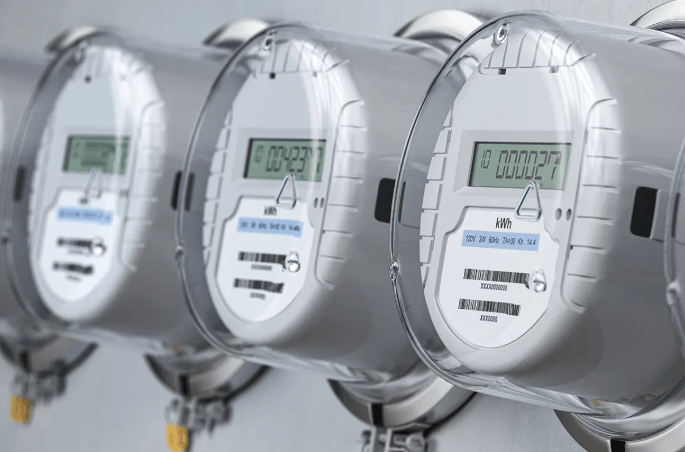
- Pull 15-minute interval meter data from every building in the district
- Compare current use against weather-adjusted historical baselines
- Produce a building performance report for every head custodian
- Flag anomalies, like a spike in base load or an unexplained extended run time, for facilities staff to investigate
One of the program’s original interns, Marianna, started as a student from West Tacoma School District and continues to lead the program’s weekly check-ins with head custodians, following up on flagged issues and keeping building staff engaged. The district’s facilities director, who has overseen the program for years, says the model has since expanded to a neighboring district, and that a former Bellevue High School senior helped carry the AEM movement forward in its earlier years as well.
Gresham-Barlow isn’t the only district running this model. Advanced Energy Management operates as a broader regional workforce-development program: Chelan County PUD’s own reporting documents a separate cohort of Wenatchee High School sophomores using the utility’s metering data to identify energy-saving opportunities across roughly 10 buildings, work recognized with a 2024 NCW Tech Alliance Innovator Award.
Why interns instead of software alone? As Gresham-Barlow’s facilities team put it during the webinar:
“A facilities director telling a principal to save energy is one thing. A student making the same case lands differently, and it tends to stick.”
What a Teenager Catches That a Monthly Utility Bill Doesn’t
Kierra and Sam’s $4,000 catch is the clearest proof of concept, but it isn’t the only one. Both catches below came from the same underlying discipline: data granular enough, and eyes on it regularly enough, that nothing runs unnoticed for long.
| Who caught it | What happened | Cost contained |
| Student interns (Kierra & Sam) | Traced a cost swing to an extended, authorized run time | ~$4,000 swing explained and confirmed |
| Night custodian | Heard an HVAC unit running after hours when it shouldn’t have been, flagged it for repair | Loss contained to ~$1,000 |
Neither catch depends on a control system alone. Both depend on someone paying close, regular attention to data most districts only look at once a month, if that. Built into a paid student role, that attention becomes a standing part of how a district operates, not a lucky break.
A National Starting Point, Even Without a Formal Internship
Not every district has the staffing capacity to run a paid student internship on day one, and that’s fine. EPA’s K-12 Energy Efficiency Student Toolkit offers a lower-lift starting point built for the same purpose: putting students in direct contact with their school’s energy data. Updated for the 2024-2025 school year, the toolkit helps students:

- Benchmark and understand their school’s energy use
- Conduct an energy efficiency “treasure hunt” using EPA’s audit checklist
- Encourage their school community to adopt energy-efficient habits
- Measure cost reductions tied to specific upgrades
For a district weighing where to start, this is a reasonable first step: get students conducting the audit before building the formal reporting structure Gresham-Barlow now runs on.
The Other Half: Getting the Adults to Compete, Too
Student engagement is one lever. Pinellas shows what happens when you pull a second one: giving school leaders a reason to compete on the same data. The district’s current model centers on Energy Use Intensity (EUI), a measure of how much energy a building consumes relative to its square footage.
How the Pinellas incentive works:
- Every one of the district’s 130 schools gets an adjusted EUI baseline, accounting for anomalies like construction years or HVAC replacements
- Schools are grouped into five size-based classes, so each one competes against comparable buildings, and against its own prior performance
- Beat your adjusted EUI target: earn a cash award, up to $3,400 for the largest schools
- Post the best improvement in your class: the award jumps to $8,400
- Principals control how the money gets spent: classroom libraries, media center upgrades, and student recognition programs have all come out of these funds
One case study from the webinar stood out: a newly appointed principal consolidated her school’s after-hours and summer programming into a single wing, letting the rest of the building’s HVAC shut down entirely during off-hours. The result was a 30.45 percent reduction in her school’s EUI in a single year.

Principals already compete over school grades and student achievement data. Handing them clean, credible energy data channels an instinct that’s already there, the same instinct that makes a data-literate student intern effective in a different part of the building.
Why This Model Fits GGI Priority Districts
Neither of these strategies requires a major capital investment to start. They require data access, a willingness to hand real ownership to students and school-level staff, and a plan to reinvest savings locally. That combination matters most in districts where budgets are tightest, GGI’s priority districts among them, where at least half of students qualify for free or reduced-price lunch, and Native American schools. Both districts in this webinar chose to put their savings directly back into staff raises, classroom resources, and student programs, the kind of visible reinvestment that keeps a program credible with the community it serves.
Get Started
- Explore EPA’s K-12 Energy Efficiency Student Toolkit as a low-lift way to involve students in your district’s first energy audit
- Benchmark your district’s buildings using EPA’s K-12 Schools resource page and ENERGY STAR Portfolio Manager
- Start GGI’s free course, Creating an Energy Efficient IAQ Management Plan
- Browse the full GGI IAQ course library
- Visit the GGI IAQ hub for more district-tested strategies
The Go Green Initiative – Healthier air, healthier schools, and healthier futures. Learn more at:
GoGreenInitiative.org/IAQ | IAQ@GoGreenInitiative.org
Upload IAQ Management Plan | EPA’s IAQ Tools for Schools & ENERGY STAR® Webinars