September 30, 2026 | In Air Quality, Energy, Resources, Sustainability
Stop Choosing Between Energy Savings and Healthy Air
What the Evidence Says About a Choice Districts Never Had to Make

Picture a budget meeting in any district, where school ventilation and energy efficiency show up as competing proposals: an energy retrofit that will trim utility bills, and a ventilation upgrade that will improve the air students breathe. Someone says what everyone is thinking: we can only fund one.
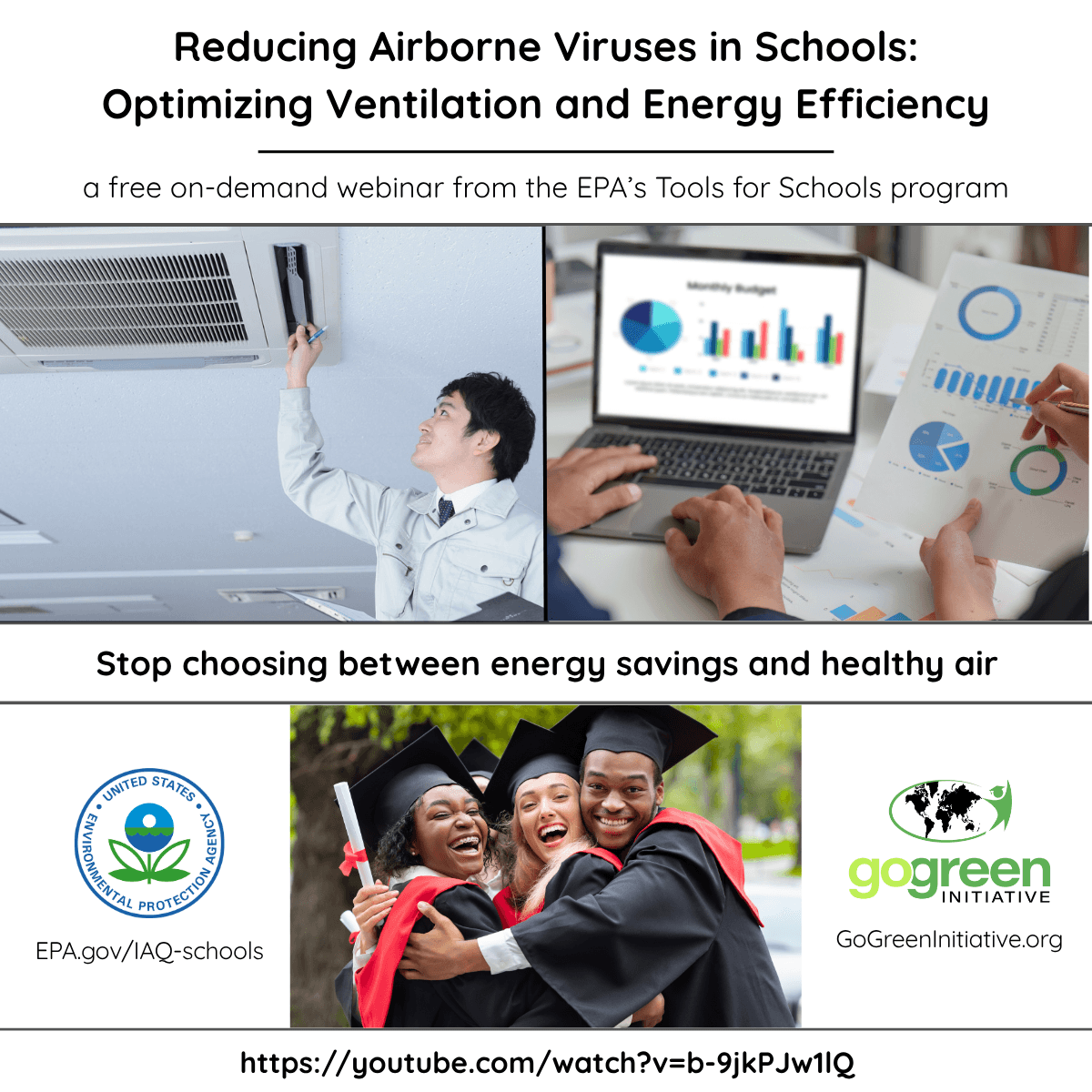
That framing is common, and it doesn’t hold up. EPA’s on-demand webinar Reducing Airborne Viruses in Schools: Optimizing Ventilation and Energy Efficiency brought together Dr. Joseph G. Allen, Director of Harvard’s Healthy Buildings Program; Hannah Carter of the Center for Green Schools at the U.S. Green Building Council; and Joni Rix of Denver Public Schools.
Asked how to balance air quality against energy conservation, Dr. Allen’s answer was blunt:
“How about no balance?”
The research and real-world results back him up. Here is why.

Why the False Choice Persists
Energy codes and indoor air quality standards have long been written by separate bodies that rarely coordinate, so a building can satisfy one and ignore the other. Ventilation targets show the result. A health-based target of about 30 cubic feet per minute (cfm) of outdoor air per person dates to the 1890s, but ASHRAE cut ventilation minimums by half or more in the 1970s, shifting the goal from protecting health to controlling odors. For decades, many schools have been operating under minimums that were never designed around students’ health.
That is starting to change. CDC advises aiming for five or more air changes per hour of clean air when possible, and the California Department of Public Health recommends that classrooms have at least five air changes per hour or 30 cfm per occupant of equivalent clean airflow, whichever is greater. Health-based targets are rising, which makes the cost question fair to ask.

Why Ventilation Is a Learning Issue, Not Just a Facilities Issue
It’s easy to file ventilation under “maintenance.” The evidence says it belongs under “instruction.”
A study of fifth-grade classrooms in 100 elementary schools in the southwestern U.S. found that 87 fell below the minimum ventilation rate in the standard at the time. Among those classrooms, each additional liter per second of outdoor air per person was associated with 2.9% more students passing math and 2.7% more passing reading. It is an association, not proof of cause, but it points the same direction as the rest of the research on air quality and performance.
Air also carries illness. Respiratory particles don’t stop at an imaginary buffer. They build up in a room much like smoke, and Harvard’s modeling estimates that, depending on ventilation and filtration, 1 to 3 percent or more of the air a person breathes indoors was recently exhaled by someone else. That is why EPA’s guidance for schools rests on three approaches: increased ventilation, enhanced filtration, and portable air cleaners where the first two fall short.
Why Commissioning Comes First
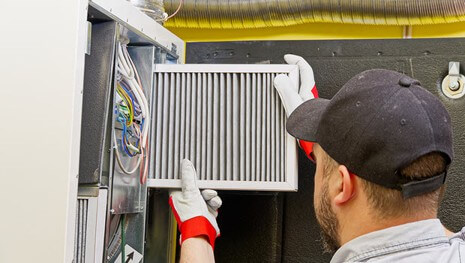
If you can only take one step, commissioning is the best-supported one. It is a systematic tune-up that finds and fixes HVAC systems that have drifted from how they were designed to operate. This matters for two reasons. It shows which systems need a small adjustment and which need replacement, so limited dollars go where rooms actually need help. And it pays for itself.
Berkeley Lab’s analysis of about 1,500 North American buildings found that existing-building commissioning delivered median energy savings of 5 to 14 percent, depending on program type, at a median cost of about $0.26 per square foot. The median simple payback was 1.7 years. Because commissioning also reveals ventilation and filtration problems, the same work that trims the energy bill improves the air.
The pattern repeats elsewhere. Envelope and HVAC upgrades that raise indoor air quality often lower energy costs too, which is why the two goals so often belong in one project.

What Not to Trade Away: Outdoor Air
When energy costs pinch, a tempting idea surfaces: close off the outdoor air and clean the indoor air over and over. This sounds efficient, but it rests on two assumptions that rarely hold. First, it assumes we know every pollutant we need to remove, and it assumes we can remove them effectively. Second, it gives up the benefits research has associated with higher outdoor air ventilation rates.
A more reliable approach combines ventilation and filtration, matched to what your equipment can handle:
- Upgrade filters carefully. EPA advises against adding MERV 13 filters ad hoc. Have a professional confirm the highest-rated filter your system can handle, and consider low-pressure-drop options.
- Use portable air cleaners as a stopgap. They work well for rooms where system upgrades aren’t practical or during periods of high respiratory illness, but they are not a whole-building plan. Choose low-noise units with a high clean air delivery rate.
- Don’t run enhanced mode all year. ASHRAE Standard 241’s enhanced “pandemic mode” was designed to be switched on and off by local decision makers, so it doesn’t have to be a permanent energy load.
Proof It Works: A District With Old Buildings and Tight Budgets
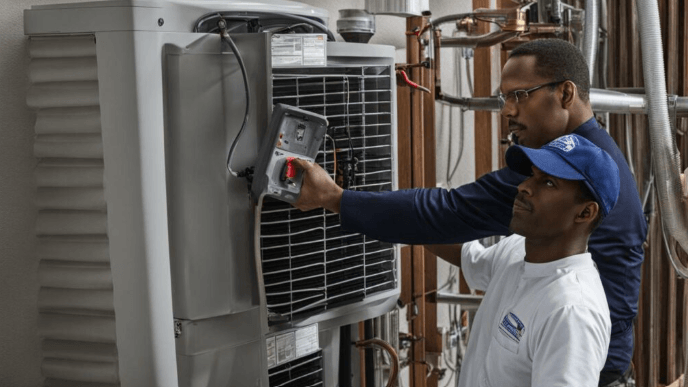
Denver Public Schools shows what this looks like without unlimited resources. The district maintains about 200 buildings averaging more than 55 years old, with a six-person environmental team. About 62 percent of its students would qualify for free or reduced-price lunch.
Its results are concrete:
- Measurable air quality gains. In a pilot with CU Boulder and Carrier at 17 elementary school buildings, classroom air purifiers reduced airborne particles by an average of 50 percent compared to classrooms without them.
- Data that scales. That evidence helped build the case for permanent sensors in about 800 classrooms, with roughly 400 more added through a state grant.
- Equity built in. The district declined to let individual schools buy their own purifiers, citing equity concerns across the district, so access wouldn’t depend on which school could raise the money.
- Answers still to come. Denver is part of a multiyear study with CDC and University of Colorado researchers testing whether air purifiers affect absenteeism. Results weren’t available when the webinar was recorded, so this is one to watch.
For districts where 50% or more of students receive free or reduced-price lunch, and for Native American schools, the trade-off feels sharper because budgets are tighter. That is exactly why pursuing energy and air quality together, instead of funding one and deferring the other, matters most.

A Written Plan Is What Holds It Together
Here is the gap. In a 2022 Center for Green Schools survey of district staff, fewer than half of the districts had a written IAQ management plan, and fewer than half had a district-level team focused on IAQ. Without a plan, energy and air quality projects compete for attention instead of supporting each other.
That is exactly what GGI’s free courses are built for:
- Creating an Energy Efficient IAQ Management Plan (Unit 1, Course 1) puts mission, roles, and procedures on paper, with energy efficiency built in.
- Documenting GHG Emissions Using ENERGY STAR Portfolio Manager builds the energy tracking that connects IAQ work to savings.
- Conducting Baseline & Annual Assessments (Unit 2, Course 3) covers IAQ monitors alongside energy consumption and GHG emissions, so you measure both together.
EPA’s IAQ Tools for Schools Action Kit and Framework for Effective School IAQ Management give districts checklists and a continuous-improvement structure to follow.

Why Indoor Air Quality and Energy Efficiency Belong in One Plan
If you skip a step, the tension comes right back:
- Upgrade without measuring, and you’re guessing which rooms need the money.
- Cut energy use without checking ventilation, and savings can come at students’ expense.
- Improve air without tracking energy, and you’ll struggle to show the whole return.
Do them together, starting with commissioning, real data, and a written plan, and each decision supports the other.
Take the Next Step
Watch the full webinar on EPA’s website or on YouTube, then work through GGI’s free, on-demand IAQ Courses. For facility staff who want a deeper technical dive, the webinar also highlights the Center for Green Schools and EPA’s free online course (six self-guided modules, about three hours) and EPA’s IAQ Master Class series of ten one-hour webinars.
Completing a GGI course earns points toward your district’s 2027 Magna Award application (deadline October 31, 2026), but that’s a bonus, not the point. The real return is a program that saves energy and protects students at the same time.
Measure first. Plan together. Protect both.
The Go Green Initiative – Healthier air, healthier schools, and healthier futures. Learn more at:
GoGreenInitiative.org/IAQ | IAQ@GoGreenInitiative.org
Upload IAQ Management Plan | EPA’s IAQ Tools for Schools & ENERGY STAR® Webinars