November 10, 2026 | In Air Quality, Climate Change, District Services, Energy, Health, Resources, Utility Analysis & Reduction
5 Steps to Reduce Airborne Viruses in Your Schools
Ventilation, filtration, and energy-smart strategies from EPA’s on-demand webinar
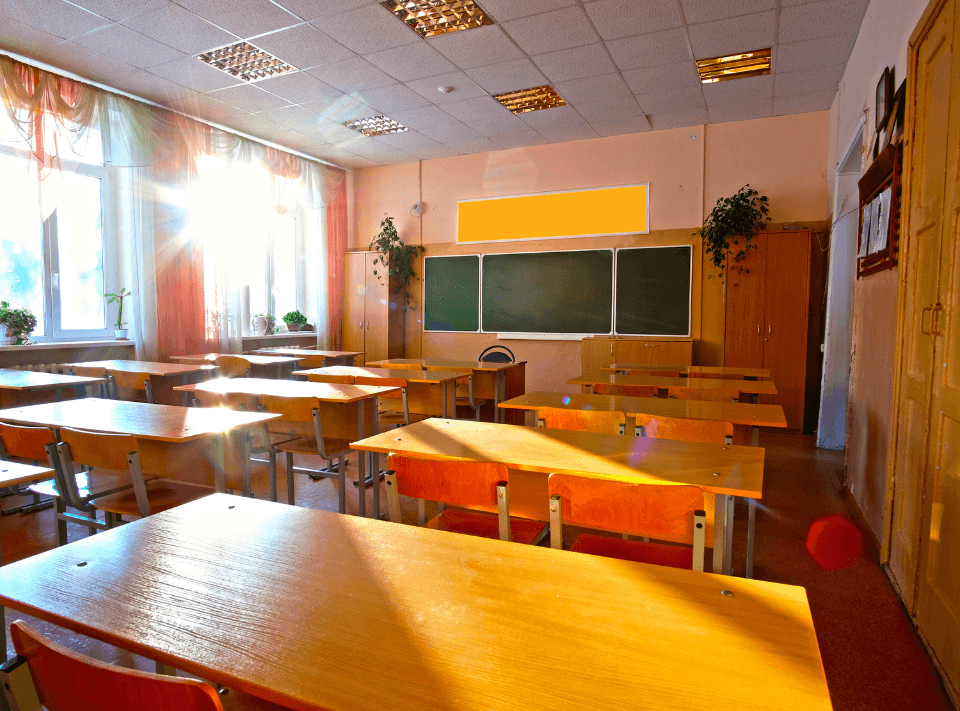
A classroom is a shared pool of air. When someone in the room is sick, what they breathe out spreads through the whole space. The building’s ventilation and filtration decide how much of it everyone else breathes in.
That idea runs through EPA’s on-demand webinar. “Reducing Airborne Viruses in Schools: Optimizing Ventilation and Energy Efficiency” was recorded February 6, 2025 as part of the IAQ Tools for Schools program. Speakers included Dr. Joseph Allen of the Harvard T.H. Chan School of Public Health, Hannah Carter of the Center for Green Schools at the U.S. Green Building Council, and Joni Rix of Denver Public Schools.
Here is the encouraging part for district leaders: The steps that reduce airborne viruses in schools also support learning, and they don’t have to compete with your energy goals. Below are the points we think matter most, and where to start.

Why the Air in a Classroom Matters
Respiratory particles do not stay inside a six-foot bubble. In a classroom simulation built with input from Dr. Allen and published by The New York Times, they spread through a room much like cigarette smoke. Depending on a room’s ventilation and filtration, 1 to 3 percent or more of the air a person breathes can have already been in someone else’s lungs. This is a measure researchers call the “rebreathed fraction.”
The same simulation showed what helps. Opening a window lowers concentrations, and adding a portable HEPA air cleaner lowers them further. Risk never reaches zero, but one infected person becomes far less likely to expose an entire room.
The same measures pay off beyond respiratory season:
- Sharper thinking. In Harvard’s double-blind COGfx studies, adults in better-ventilated spaces scored higher across nine cognitive domains, and follow-up studies in real-world buildings found similar results.
- Stronger student results. Allen pointed to numerous studies linking better ventilation with higher test scores. A Lawrence Berkeley National Laboratory review found significant performance gains at higher ventilation rates in eight of 11 studies, and a study of 140 U.S. classrooms linked ventilation rates to math scores.
- Fewer particles, broader benefits. A 2024 National Academies report, cited by Hannah Carter, urged public health officials to prioritize reducing indoor fine particulate exposure and recommended filtration-based air cleaning among its mitigation strategies. Better filtration likely helps beyond infection control.
What “Enough” Ventilation Looks Like
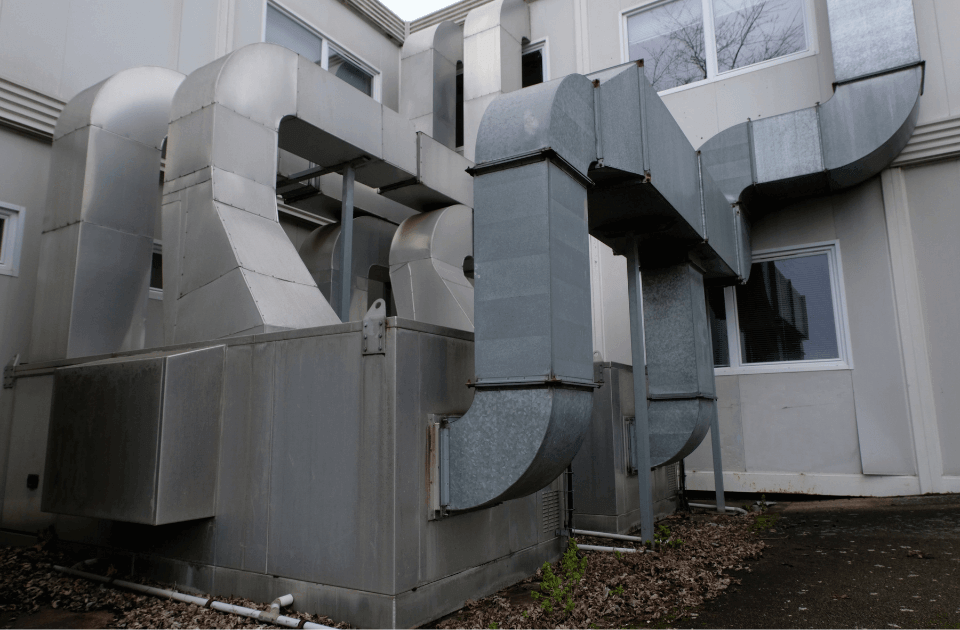
Dr. Allen’s commentary in the American Journal of Public Health traces a revealing history. A health-based target of 30 cubic feet per minute (cfm) of outdoor air per person dates to the 1890s, but 1970s standards cut rates by half or more, in part to control odors. In his view, today’s minimum standards are a floor, not a health goal.
Newer benchmarks are converging on a stronger target:
- CDC: when possible, aim for 5 or more air changes per hour (ACH) of clean air.
- Lancet COVID-19 Commission task force: good, better, and best tiers of 4, 6, and more than 6 equivalent ACH, or about 21, 30, and 30+ cfm per person.
- A Science article by 40+ international experts: a new minimum of about 30 cfm per person (14 liters per second).
- California Department of Public Health: for schools, at least 5 ACH or 30 cfm per occupant of equivalent clean airflow, whichever is greater.
EPA’s guidance, which aligns with CDC and ASHRAE, rests on three proven approaches: increase ventilation, enhance filtration, and supplement with portable air cleaners. Start by confirming, with qualified professionals, that your systems meet the ASHRAE 62.1 minimum ventilation standard across campus.
What if an older HVAC system can’t keep up?
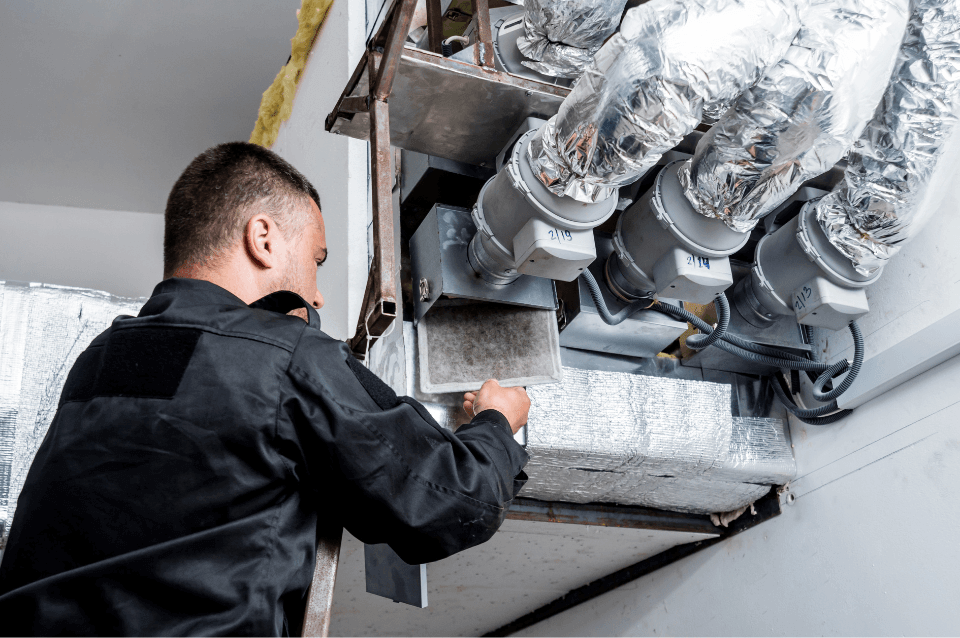
EPA’s Jordan Zambrana advised against adding MERV 13 filters ad hoc. Have a professional identify the highest-rated filter your equipment can handle. If MERV 11 or 13 isn’t possible, use portable air cleaners. Allen added that most systems can handle low-pressure-drop MERV 13 filters, and that portable units work best as a stopgap for hard-to-ventilate rooms or high-illness periods, since people tend to switch them off. His caution: don’t close off outdoor air and rely only on indoor cleaning.
Healthy Air and Energy Efficiency Are Not a Trade-Off
Districts often hear that more ventilation means higher energy costs. Dr. Allen questioned the framing. For decades, buildings were optimized for energy at the expense of health. The standards and codes governing each side rarely talk to each other. In his view, the technology to do both already exists.
Three practical ways the goals reinforce each other:
- Commission your systems. Allen called this a tune-up and the first step for any district. It shows what needs a minor adjustment versus replacement, saves energy and money, and improves air quality.
- Upgrade systems and the building envelope. Carter noted these improvements raise efficiency and cut costs, a win-win.
- Build new for both. Denver works to build high energy efficiency into new construction, including RASA, its first all-electric school, which opened in fall 2024.
This is the space where Go Green Initiative works every day: improving indoor air quality and reducing greenhouse gas emissions together, so districts don’t have to choose between healthy students and a healthy planet.

A Large District’s Playbook: Denver Public Schools
Joni Rix, Denver Public Schools’ Environmental Program Manager, shared what proactive IAQ management looks like at scale. As she described it, the district serves about 90,000 students across roughly 200 buildings averaging more than 55 years old, and 62 percent of students would qualify for free or reduced price lunch. Her six-person environmental team is spread thin, like many districts.
When COVID hit, families and staff asked how many air changes per hour classrooms had and what CO2 readings showed. The district had no data to answer. What followed was a step-by-step build:
- Test before you spend. A 2020 pilot with CU Boulder and Carrier put right-sized HEPA units and sensors in three to six classrooms at each of 17 elementary schools. Airborne particles dropped by about 50 percent on average compared with rooms without purifiers.
- Spend where it counts, and fairly. Units in roughly 10,000 classrooms would have cost a couple million dollars, so the district prioritized HVAC fixes and filter upgrades and, citing equity, did not allow individual schools to buy their own. When state funding arrived, it placed purifiers in higher-risk spaces such as nurse cot rooms and music rooms.
- Measure continuously. Leadership funded about 800 permanent sensors in 10 percent of classrooms, covering every region and school, and a state grant added 400 more. The data now tracks temperatures in schools without air conditioning, answers dust complaints with real numbers, and flagged a likely broken pipe when one school’s humidity hit 80 percent.
- Contribute to the evidence. Denver is participating in a multiyear study involving the CDC, CU Anschutz, and CU Boulder on whether air purifiers affect absenteeism and respiratory virus detection. Results were pending at the time of the webinar.
Rix’s central lesson, which EPA’s facilitator called a favorite, is that you can’t manage what you don’t measure. Progress comes in increments, and in a school district, slow and steady wins the race.

Where to Start: Five Steps to Reduce Airborne Viruses in Schools
When a participant asked how a large district can move from reactive to proactive IAQ management, Dr. Allen’s advice was to follow Denver’s lead. Combined with EPA’s guidance and the Center for Green Schools’ research, that points to a clear path:
- Commission your HVAC systems. Know what you’re working with before deciding what to fix or replace.
- Install real-time monitors. CO2 is a useful proxy for whether enough outdoor air is arriving, and monitoring often shows that many rooms are fine, so you can target help where it’s needed. Allen cautioned that IAQ thresholds vary across organizations, so decide how you’ll interpret the data. Boston Public Schools, one of GGI’s first cohort districts, publishes a public guide to its dashboard thresholds.
- Get ventilation and filtration right first. Confirm minimum ventilation is met, upgrade to the highest filter rating your system can handle, and add portable HEPA cleaners where needed. EPA’s Framework for Effective School IAQ Management suggests starting with high-risk areas such as nurses’ offices and crowded spaces.
- Write the plan and name the team. A 2022 Center for Green Schools survey of district staff found that fewer than half of districts had a written IAQ management plan or a district-level IAQ team, and about 90 percent lacked established processes to communicate with and train staff. Staff named all three as priorities.
- Train the people who run the buildings. The free, self-guided Clean Air in Schools course, co-developed by the Center for Green Schools and EPA, has six modules and takes about three hours. No USGBC account is needed unless you want a certificate.
Carter named the barriers districts report most: staff turnover, aging infrastructure, limited capacity, and getting buy-in. A written plan, a clear team, and trained staff address each one.

Take the Next Step
Clean air is one of the most practical investments a district can make in student health, learning, and operating costs. Here is how to start:
- Watch the webinar. The full recording is free on demand: Reducing Airborne Viruses in Schools: Optimizing Ventilation and Energy Efficiency. EPA also offers more training in its IAQ Tools for Schools webinar library.
- Build your IAQ management plan with GGI. Our free course, Unit 1, Course 1: Creating an Energy Efficient IAQ Management Plan, helps close the plan, team, and training gaps that survey found, and is part of our free IAQ course library.
- Explore the IAQ hub at GoGreenInitiative.org/IAQ.
- Check cohort funding eligibility. Districts where at least 50 percent of students receive free or reduced price lunch, and Native American schools, may qualify for direct funding. The Cohort 3 application is open through February 27, 2027.
The Go Green Initiative – Healthier air, healthier schools, and healthier futures. Learn more at:
GoGreenInitiative.org/IAQ | IAQ@GoGreenInitiative.org
Upload IAQ Management Plan | EPA’s IAQ Tools for Schools & ENERGY STAR® Webinars
2027 Magna Awards I Apply to be part of Cohort 3
(This post highlights EPA’s IAQ Tools for Schools on-demand webinar series. GGI’s IAQ work is supported by an EPA grant.)