January 30, 2026 | In Air Quality, Resources
How to Write a Winning IAQ Grant Application
Is This Grant Right for Your District?
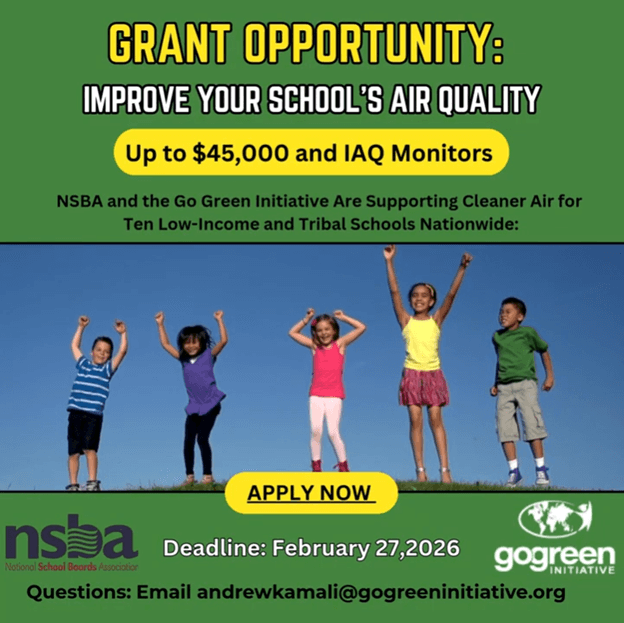
The NSBA/Go Green Initiative IAQ grant provides up to $45,000 in funding plus technical assistance to help school districts improve indoor air quality and reduce greenhouse gas emissions. With only 10 districts selected nationwide each year, competition is significant but a well-crafted application can make the difference.
Cohort 1 Is Already Proving What’s Possible!
Our first 10 districts represent the diversity of American public education from rural Montana to urban Massachusetts and are already making meaningful progress:
- Boston Public Schools, MA: Working to install air-quality monitors in every classroom across 120+ schools, demonstrating how large urban districts can scale IAQ improvements
- East St. Louis School District 189, IL: Channeling federal and state funds into HVAC modernization after years of underinvestment, proving renewal is possible
- Arlee Joint School District, MT: Students are collecting air quality data in environmental science classes, turning classrooms into living laboratories
- Standard School District, CA: Using real-time monitoring and HEPA filtration to combat wildfire smoke, dust, and extreme heat in Bakersfield
- Salamanca City Central School District, NY: Aligning IAQ improvements with indigenous stewardship principles to benefit the next seven generations
- Alexandria City Public Schools, VA: Strengthening their existing IAQ Management Plan with measurable goals and revised staff training
- Bibb County School District, GA: Building on strong energy management to modernize facilities over 40 years old
- Tornillo ISD, TX: Integrating IAQ work into their mission of supporting the whole student in rural West Texas
- North Daviess R-III School District, MO: Using creative solutions to meet national standards despite limited staffing and a single school building
- Arlee Joint School District, MT: Engaging students, staff, and leadership to build systems for consistently healthy learning environments
Whether your district serves 50 students or 50,000, meaningful progress is achievable!
What the Grant Provides
Selected districts receive:
- Up to $45,000 in grant funding
- On-the-ground technical assistance from experts
- Support developing board-approved IAQ Management and GHG Reduction Plans
- Baseline assessment support and implementation guidance
TIMELINE: Districts begin onboarding in summer, with full implementation starting September 1.
Who Can Apply?
Eligible districts:
- Low-income school districts (50%+ students qualifying for free/reduced lunch)
- Tribal school districts and schools serving Tribal communities
- Districts in all 50 states, U.S. territories and all 10 EPA regions
What’s required of selected districts:
- Enact school board policy addressing IAQ management and GHG reduction
- Conduct baseline assessments
- Implement board-approved plans
- Measure, quantify and report outcomes
What Reviewers Look For
With only 10 spots available, reviewers prioritize:
- Clear Eligibility – Numbers clearly show you qualify
- Genuine Need – Specific air quality challenges affecting students and staff
- District Capacity – You have the people and systems to manage this program
- Realistic Plans – Proposed use of funds is achievable and thoughtful
- Long-term Vision – Improvements will continue beyond the grant period
Your application should tell a complete story: who you are, what you need, how you’ll use this opportunity and the lasting impact it will have.
Crafting a Strong Application
1. Eligibility Documentation
Include:
- Current student enrollment numbers
- Percentage of students qualifying for free/reduced lunch OR Tribal community documentation
- Geographic location and EPA region
- District classification (rural/urban/suburban)
Tip: Use your most recent verified data. If your percentage is close to 50%, provide additional context about enrollment trends or economic factors.
2. District Background & Context
Help reviewers understand your unique situation with specific details.
Strong example: “Our district serves 3,200 students across 5 schools, with 62% qualifying for free/reduced lunch. Buildings range from 15-45 years old. We’ve documented increased asthma-related absences in older facilities. While we’ve made some HVAC improvements with limited funding, we lack comprehensive monitoring, systematic IAQ protocols, and resources to develop district-wide solutions.”
Why this works: Specific numbers, concrete details, shows prior effort, clearly states the gap.
3. Needs Assessment – Be specific and use data
Instead of vague statements: ❌ “We need better air quality in our schools”
Use specific details: ✅ “Our 1980 middle school lacks adequate ventilation in 12 classrooms serving 340 students daily. We’ve documented a 23% increase in asthma-related absences over the past two years. Our facilities team has identified ventilation deficiencies but lacks training and resources to develop a comprehensive IAQ management plan.”
Data that strengthens applications:
- Student absence rates related to respiratory issues
- Health complaints from students or staff
- Building inspection reports noting IAQ concerns
- HVAC system age and condition assessments
4. Proposed Use of Funds
Be Realistic: Don’t claim you’ll fix every issue in every building with $45,000. Focus on meaningful, achievable improvements in priority areas.
Be Strategic:
- Prioritize buildings with the greatest need
- Choose solutions that can serve as models
- Show how improvements integrate with existing operations
- Focus on sustainable approaches
5. Commitment & Capacity
Include:
- Key partners involved (facilities, administration, health services)
- Evidence of leadership support (letters from superintendent, board president, facilities director)
- Staff who will manage the program and their experience
- How this integrates into existing operations
- Explicit commitment to required steps (board policy, assessments, reporting)
6. Sustainability Management Plan
This isn’t a one-time fix, it’s about building lasting capacity.
Include:
- How you’ll maintain improvements after the grant
- Plans to integrate IAQ into ongoing operations
- How lessons learned will be applied district-wide
- Budget commitments for continuation
- Staff training plans
Tips for Success
Use Data Effectively
- Student health data (absence rates, nurse visits)
- Building condition assessments
- Current IAQ measurements if available
- Cost estimates from vendors
Show, Don’t Just Tell
- Identify specific staff with allocated time
- Include support letters
- Reference past successes
- Demonstrate commitment through action
Connect to Bigger Picture: Align with district strategic plans, facility master plans, health initiatives, or equity goals
Application Checklist
Before submitting:
- Complete, accurate eligibility documentation
- Detailed needs assessment with specific data
- Realistic, specific use of $45,000 outlined
- Evidence of district capacity demonstrated
- Long-term sustainability plan detailed
- Understanding of all program requirements shown
- Proofread for clarity and completeness
Resources & Support
Program Manager: Andrew Kamali, Go Green Initiative (andrewkamali@gogreeninitiative.org)
Don’t hesitate to reach out with questions about eligibility, application process or program expectations.
Application Link: https://nsba.iad1.qualtrics.com/jfe/form/SV_1UgDVd6wGlaBKiq
Next Steps
Before you apply:
- Review eligibility requirements carefully
- Gather necessary documentation and data
- Involve key interested parties across departments
- Allow 4-6 weeks for development
- Set internal deadlines ahead of the official deadline
Final Thoughts
Indoor air quality directly impacts student health, attendance and academic performance. A strong application requires time, collaboration, specific data, realistic planning and long-term vision.
With only 10 spots available nationwide, competition is significant. But if your district qualifies and genuinely needs this support, a well-crafted application demonstrating both need and capacity can help you stand out.
Cohort 1 has shown that districts of all sizes and contexts, from single-building rural schools to large urban systems can successfully leverage this grant to create healthier learning environments. Whether you’re building on existing IAQ efforts or starting from the ground up, this program provides the support and resources you need.
Every student deserves to learn in a healthy environment with clean air. This grant can help make that a reality in your district.