July 11, 2026 | In Air Quality, Energy, Health, Resources, Sustainability
Creating an IAQ Management Plan
Where Every Healthy School Building Starts
If your district is serious about improving indoor air quality, reducing greenhouse gas emissions, and protecting student health, there is one document that makes all of it possible: an IAQ Management Plan. It is the foundation everything else gets built on, and it is exactly where GGI’s IAQ course library begins.
Today we are launching our first course spotlight in a new series walking through GGI’s IAQ Courses, starting at the very beginning: Unit 1, Course 1: Creating an Energy Efficient IAQ Management Plan. Whether you are a facilities director, superintendent, or newly appointed IAQ Coordinator, this course gives you the structure and the tools to turn “we should probably do something about air quality” into a documented, actionable plan your district can actually follow.
Every healthy school started with one plan. Not a perfect one, not a fully funded one, just one plan that someone in the district decided to write down and follow through on. This course is designed to help you write that plan.

Why an IAQ Management Plan Matters
Indoor air quality affects far more than comfort. Research connects poor IAQ in schools to increased asthma incidents, higher absenteeism, and reduced cognitive performance, exactly the outcomes districts are working hardest to prevent. The EPA’s Indoor Air Quality Tools for Schools framework has long recognized that healthy air does not happen by accident. It happens through intentional planning, clear ownership, and consistent follow-through.
An IAQ Management Plan is what makes that intentionality real. It is the difference between reacting to a mold complaint after the fact and having a system in place that catches problems early, assigns responsibility, and keeps your school community informed every step of the way. For districts managing GGI’s EPA-supported IAQ work, this plan is also the backbone that ties together assessments, GHG documentation, staff training, and community engagement into one coherent strategy.
Below, we break the course into four practical groupings, mirroring how the lessons build on one another.
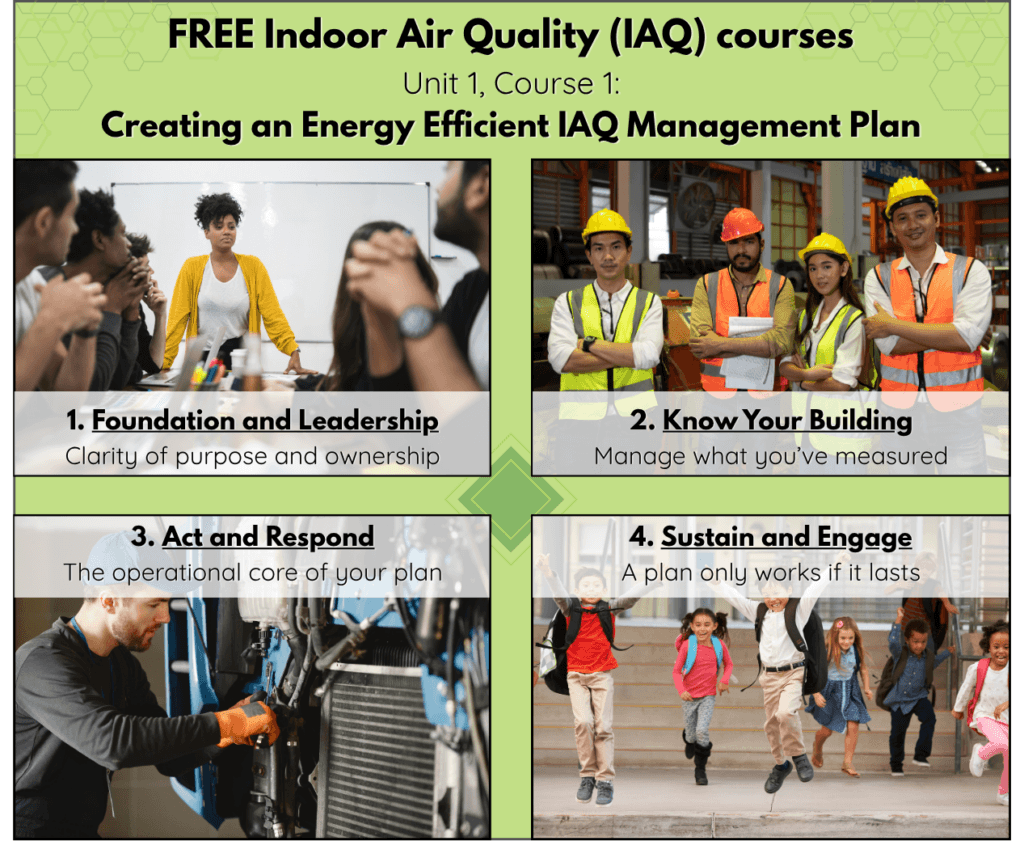
Foundation and Leadership: Start with Why and Who
Every strong plan begins with clarity of purpose and clarity of ownership. The course opens here for a reason.
- IAQ Mission Statement: Before you write a single procedure, your district needs a mission statement that anchors the plan. This is the “why” that keeps a plan from becoming a binder that sits on a shelf. A good mission statement is specific enough to guide decisions and public enough to hold the district accountable to its own commitment.
- Role of the IAQ Coordinator and IAQ Team: Plans fail when nobody owns them. This lesson walks through how to designate an IAQ Coordinator, who typically sits at the district level, and how to build out an IAQ Team that includes facilities staff, health services, and administration. Clear roles mean that when an air quality issue comes up, everyone already knows who is responsible for what.

Know Your Building: Assess Before You Act
You cannot manage what you have not measured. This second cluster of lessons focuses on understanding current conditions and the rules your plan needs to operate within.
- Background and IAQ Findings: This lesson covers how to document your buildings’ history, including past IAQ complaints, HVAC performance, moisture issues, and any prior assessments. This baseline record becomes essential for tracking progress and demonstrating impact over time, particularly for EPA grant reporting.
- IAQ Policies and Plans: Here, districts learn how to draft the actual policy language and procedural framework that will guide day-to-day operations. This is where the mission statement from Unit 1 gets translated into enforceable, practical policy.
- Applicable Federal, State, and Local Regulations: IAQ management does not happen in a regulatory vacuum. This lesson helps district leaders identify which federal EPA guidelines, state education codes, and local building or health regulations apply to their facilities, so the plan is compliant from day one rather than retrofitted later.
Act and Respond: Build the Operational Backbone
With a foundation and an assessment in place, the course moves into the operational core of the plan: what actually happens on a daily and emergency basis.

- IAQ Procedures and Best Practices: This lesson details the recurring actions that keep air quality consistent, from HVAC maintenance schedules to green cleaning protocols to moisture control. These are the practices that shift IAQ management from occasional inspection to ongoing discipline.
- Emergency Response: Not every IAQ issue is preventable. Wildfire smoke events, HVAC failures, and mold outbreaks all require a response plan that is ready before the emergency happens, not improvised during it. This lesson covers how to build that response framework, including communication protocols for staff, students, and families.
- Staff Responsibilities for Maintaining Good IAQ: A plan is only as strong as the people executing it every day. This lesson helps districts define what custodial staff, teachers, and administrators are each responsible for, so good IAQ practice becomes part of the daily routine rather than a special project.

Sustain and Engage: Make It Last
The final section of the course addresses what many plans miss entirely: how to keep the plan alive, prevent problems before they start, and bring the wider school community along.
- Community and Stakeholder Engagement 101: IAQ plans work best when parents, teachers, and the broader community understand and support them. This lesson introduces strategies for transparent communication, including how to report on IAQ progress in ways that build trust rather than raise alarm.
- Steps to Prevention: Rather than waiting for issues to surface, this lesson shifts the plan toward proactive prevention: regular inspections, early-warning indicators, and preventive maintenance schedules that catch small issues before they become costly, disruptive problems.
- Course Summary: The course closes by tying every lesson back together into a single, cohesive IAQ Management Plan your district can implement immediately.

Your Next Step
Your plan does not need to be finished to share it with us. Submit your IAQ Management Plan, whatever stage it is at, and GGI’s team will review it and offer input on how to complete it and ways to strengthen what you already have. This also helps build a growing network of district leaders committed to healthier school buildings and lets other schools learn from your work.
- Download the template: IAQ Management Plan template
- Share your plan (completed or not): Submit Your IAQ Management Plan
Every healthy school started with one plan. Take Unit 1, Course 1: Creating an Energy Efficient IAQ Management Plan and start writing yours!
- Start the course: Creating an IAQ Management Plan
Need more information? Our resources are based on the EPA’s Tools for Schools program. Check out their free webinars to go deeper on the best ways to improve IAQ and reduce GHG:
This is the first post in a new GGI series walking through our full IAQ Courses library. Follow along as we break down each course, unit by unit, to help your district build a comprehensive, EPA-aligned approach to healthier schools.



Recent Posts